

What Is a Mini Facelift? Complete Guide vs Full Lift, Threads & Non-Surgical Options
This is an educational guide. For a treatment plan, post-exam cost estimate, and booking, go to the service page: Mini face lift in Tehran.
Quick summary
• A mini facelift is a less invasive surgery for mild-to-moderate facial laxity.
• It mainly targets the cheeks, jawline, and early jowl area.
• Incisions are usually shorter than a full facelift.
• Recovery is shorter; many patients return to daily life within 1–2 weeks.
• Best for people without severe neck laxity or large excess skin.
• A mini facelift is a less invasive surgery for mild-to-moderate facial laxity.
• It mainly targets the cheeks, jawline, and early jowl area.
• Incisions are usually shorter than a full facelift.
• Recovery is shorter; many patients return to daily life within 1–2 weeks.
• Best for people without severe neck laxity or large excess skin.
A mini facelift (Mini Facelift) is facial rejuvenation surgery designed for mild-to-moderate laxity; modern techniques reinforce deep supporting layers as well as the skin for a more natural, lasting result.
A mini facelift (short-scar facelift) is limited facial rejuvenation surgery for mild-to-moderate cheek and jawline laxity and early jowls. This page is educational: definition, candidacy, differences from a full facelift and thread lift, non-surgical comparisons, recovery, longevity, and risks. When you are ready for a clinic evaluation, use the mini face lift service page.
Why Does the Face Sag?
Aging is not only skin. Collagen and elastin decline, SMAS support loosens, deep fat thins, gravity acts continuously, sun damage lowers skin quality, genetics matter, and major weight change accelerates descent. Deep tissue shift explains why skin-only pulling rarely looks natural or lasts. A mini facelift can address those deeper supports when indicated.
Who Is a Good Candidate?
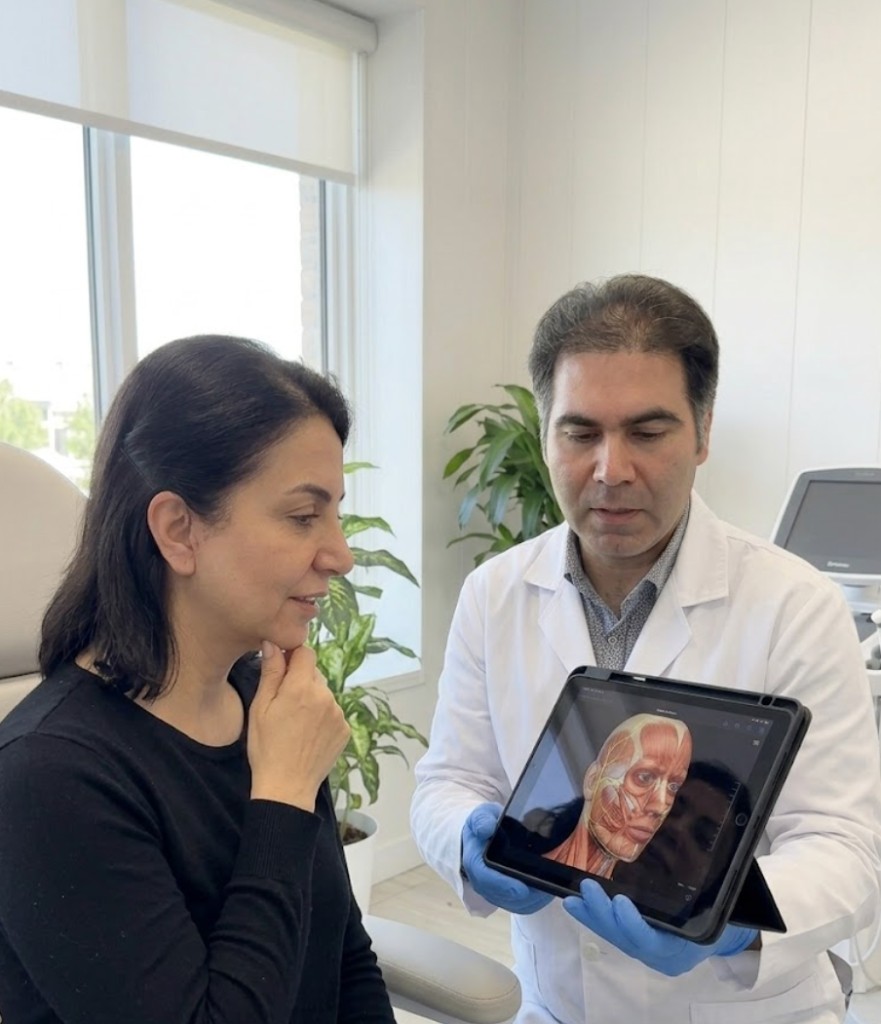
Success depends more on patient selection than on age alone. Strong candidates often have mild-to-moderate cheek descent, a softer jawline, early jowls, reasonably elastic skin, good general health, and realistic expectations. Assessment includes skin quality and thickness, laxity, neck status, jaw structure, symmetry, and prior surgery or fillers.
Who Is Not a Good Candidate?
Severe neck laxity
A neck lift or full facelift is usually better when the neck is the main problem.
Very loose excess skin
Mini facelift range may not be enough.
Unrealistic expectations
It does not stop aging or create a twenty-year-old face.
Uncontrolled medical disease
Heart disease, uncontrolled diabetes, clotting disorders, and other major issues need clearance first.
Smoking
Smoking impairs healing and skin blood flow; stopping weeks before and after is usually advised.
Mini Facelift vs Full Facelift
Both rejuvenate the face, but the scope differs.
| Criterion | Mini Facelift | Full Facelift |
|---|---|---|
| Best for | Mild to moderate laxity | Moderate to severe laxity |
| Areas treated | Cheeks and jawline | Face, jawline, and neck |
| Incision length | Shorter | Longer |
| Surgery time | About 1–2 hours | 3–5 hours |
| Recovery | Shorter | Longer |
| Degree of correction | More limited | Broader |
| Longevity | Often 5–10 years | Often 8–15 years |
Smaller is not always better. Limited laxity may not need a full facelift; extensive laxity may leave a mini underwhelming. Decision follows anatomy and severity — not ads.
Mini Facelift vs Thread Lift
They are not interchangeable. Thread lifts are non-surgical and suit very mild laxity. A mini facelift is real surgery that repositions deep structure and usually lasts longer.
| Criterion | Mini Facelift | Thread Lift |
|---|---|---|
| Type | Surgery | Non-surgical |
| Correction | Moderate | Mild |
| Longevity | About 5–10 years | About 12–18 months |
| Downtime | 5–10 days | 1–3 days |
| Best for | Mild to moderate laxity | Very mild laxity |
| Deep-layer correction | Yes | No |
Mini Facelift vs Non-Surgical Methods
Botox softens movement lines but does not lift tissue. Fillers restore volume and can mask mild sag but do not truly elevate descended tissue — overfilling can even weigh the face down. HIFU and RF stimulate collagen for mild firming and do not replace surgery for moderate/severe laxity. See the non-surgical rejuvenation guide.
Surgery is often more logical when the jawline has blurred, cheeks have dropped, jowls have formed, or non-surgical options no longer help.
How Is a Mini Facelift Performed?
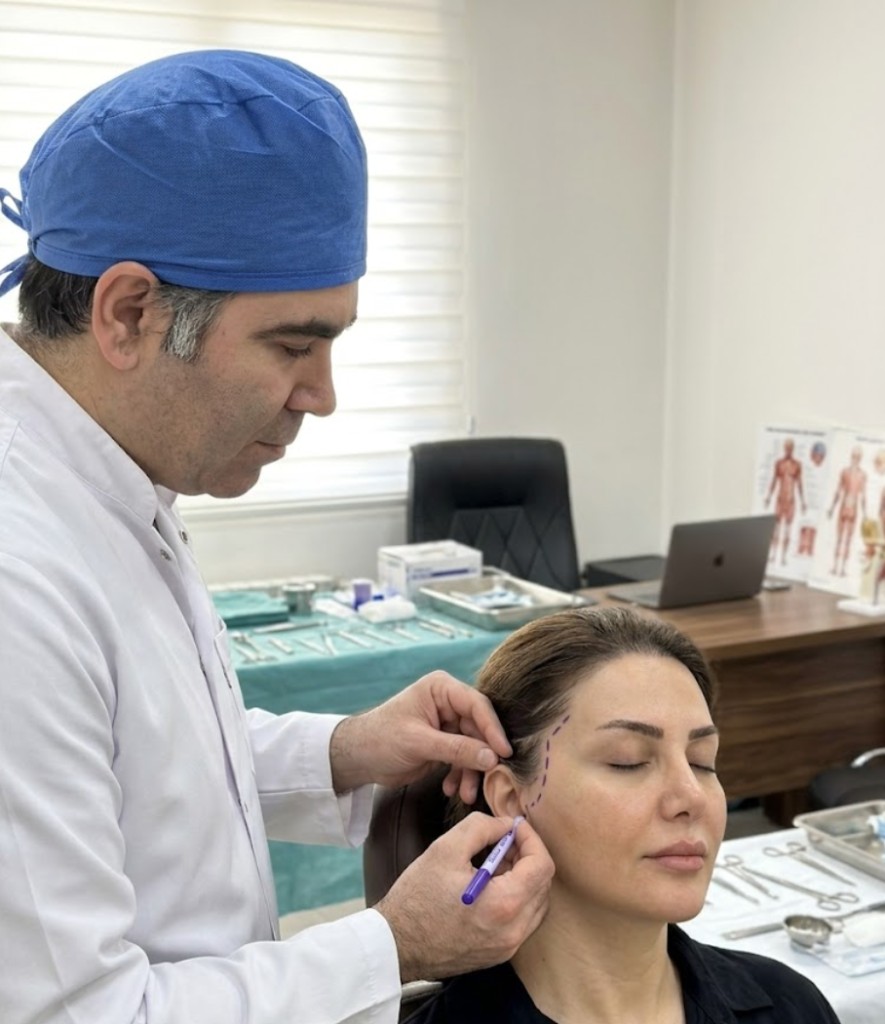
Typical steps: assessment; incision planning (often along natural creases around the ear); local anesthesia with sedation or light general anesthesia; deep-layer (SMAS) repositioning; limited excess-skin removal without over-tightening; fine sutures and light dressing. Surgery usually takes about 1–2 hours.
Scars
Incisions sit in natural ear/hairline contours. Early pinkness settles for most patients; healing also depends on genetics, aftercare, smoking, and health.
Recovery Timeline
Day 1: tightness and mild–moderate swelling; rest at home. Week 1: peak swelling/bruising; light activity often possible. Week 2: clearer improvement; many return to work/social life. Weeks 3–4: most swelling gone; jawline clearer. Months 2–3: tissues soften and results look more natural. See also facelift recovery guide.
Aftercare usually includes elevated head sleep, avoiding hard exercise for weeks, no smoking, medications as prescribed, sun protection, and follow-up visits.
What Will Results Look Like?
After swelling settles: sharper jawline, softer jowls, mildly lifted cheeks, smoother lower face, better cheek–jaw–neck harmony, natural expression. Success often looks “rested,” not “operated.” Final form emerges over weeks to about six months.
How Long Do Results Last?
Studies often report about 5–10 years. Longevity varies with age at surgery, skin quality, initial laxity, technique, weight swings, smoking, sun, and natural aging. Aging continues from a younger baseline. Later options may include a repeat mini, full facelift, or non-surgical maintenance.
What Affects Mini Facelift Cost (Educational)
A single fixed price for every patient is not accurate. Cost usually depends on surgical extent, technique, anesthesia, facility, surgeon experience, and combined procedures. For a personalized estimate and booking path, use the mini face lift service page. For a broader cost overview, see the facelift cost guide.
Risks and Complications
Possible events include swelling, bruising, mild–moderate pain, temporary numbness, bleeding, hematoma, infection, delayed healing, mild asymmetry, visible scarring in some, and rare revision. Risk falls with an experienced surgeon, honest medical history, smoking cessation, following aftercare, and attending follow-ups.
Choosing the Right Surgeon
Prioritize facial rejuvenation experience, real before/after work, honest limits, personalized planning, and safety standards. See choosing a facelift surgeon.
Common Myths
Modern mini facelifts are not “skin-only pulls.” Results are not permanent forever. A mini is not always better than a full facelift. Proper planning aims for natural motion — not a pulled look.
At a Glance
Mini facelift targets mild-to-moderate lower-face laxity (cheeks/jawline), with shorter recovery than a full lift, often 5–10 years of improvement when the right patient is selected. Cost is individualized. In-person exam decides the best plan. Clinic pathway: mini lift service page.
Frequently Asked Questions
Common questions on longevity, age, pain, scars, time off work, exercise, neck, threads, combining procedures, and full-facelift comparison are answered in the FAQ section of this page.
Summary
A mini facelift is one of the most effective surgical options for mild-to-moderate facial laxity when patients want natural rejuvenation with less downtime than a full facelift. Deep-tissue correction plus limited skin removal can sharpen the jawline and reduce jowls — but success also depends on patient selection, anatomy, expectations, and aftercare. It is not the right substitute for a full facelift in every case.
References
1. Baker DC. Minimal Incision Rhytidectomy (Short-Scar Facelift). Plastic and Reconstructive Surgery. 2. Rohrich RJ et al. Facelift Techniques and Facial Rejuvenation. Plastic and Reconstructive Surgery. 3. Aston SJ, Steinbrech DS, Walden JL. Aesthetic Plastic Surgery. 4. Nahai F. The Art of Aesthetic Surgery: Principles and Techniques. 5. StatPearls. Rhytidectomy (Facelift). 6. American Society of Plastic Surgeons (ASPS). Facelift Surgery – Patient Safety and Recovery Guidance. 7. Aesthetic Surgery Journal. Selected modern facelift / SMAS publications. 8. Facial Plastic Surgery Clinics of North America. Contemporary facial rejuvenation approaches.
Frequently Asked Questions
How long does a mini facelift last?
For most patients, mini facelift results last about 5–10 years. Age, skin quality, genetics, lifestyle, smoking, and weight changes can all affect longevity. Natural aging continues after surgery, but from a younger baseline.
What is the best age for a mini facelift?
There is no fixed age. Many good candidates are between 40 and 55, but the decision is based on laxity, tissue quality, and overall facial anatomy — not age alone.
Is a mini facelift painful?
You should not feel pain during surgery thanks to local anesthesia with sedation or light general anesthesia. Afterward most patients describe mild-to-moderate discomfort that is usually controlled with prescribed medication.
Will suture scars remain?
Mini facelift incisions are usually placed around the ear or within the hairline so they are less noticeable after healing. For most patients, scars fade over time and become hard to detect.
How much time off work do I need?
Many people return to light or desk work after about a week. Physically demanding jobs may need more recovery time before returning.
When can I resume exercise?
Light walking is usually fine in the early days, but intense workouts, weightlifting, and high-impact sports are typically delayed 4–6 weeks. Exact timing should be set by your surgeon.
Will a mini facelift change my natural facial expression?
The goal is a natural, harmonious look. Modern techniques aim to preserve natural expression and avoid over-tightening the skin.
Can a mini facelift also improve the neck?
Mild neck laxity may improve somewhat, but significant neck sagging or loose neck skin usually needs a neck lift alone or combined with a mini facelift for a better result.
Is a mini facelift better than a thread lift?
They suit different situations. Thread lifts fit mild laxity and last less long, while a mini facelift is surgery with deeper correction and greater durability.
Can a mini facelift be combined with other surgeries?
Yes. Some patients combine it with a neck lift, blepharoplasty, fat grafting, or other rejuvenation procedures. The final plan depends on your anatomy and the surgeon’s judgment.
Can I have a mini facelift if I previously had filler?
Often yes. Your surgeon still needs to know the type, location, and timing of prior injections to plan the safest, best treatment.
Can men undergo a mini facelift?
Yes. Surgical principles are similar for men and women, but incision design and tissue correction are adapted to male anatomy and hair-growth patterns.
Do I need to stay overnight after surgery?
Depending on the patient and procedure, many people go home the same day or after a short observation period. Some situations may need longer monitoring.
How long until swelling goes away?
Most swelling improves over 2–3 weeks, but deep residual swelling and the final result can take several months to settle.
Can I have surgery again after a mini facelift?
Yes. Years later, a repeat mini facelift or a full facelift may be appropriate depending on your facial aging and anatomy.
Does weight loss after surgery affect results?
Significant weight loss after surgery can reduce facial volume and recreate sagging. Patients are usually advised to reach a relatively stable weight before surgery.
Does a mini facelift stop aging?
No. It does not stop natural aging; it makes the face look younger so aging continues from a better starting point.
Can younger people have a mini facelift?
If facial laxity is driven by genetics, weight loss, or other factors, some younger patients may still be good candidates. Final suitability is decided after examination.
What helps results last longer?
Skincare, sun protection, avoiding smoking, stable weight, and a healthy lifestyle all help preserve surgical results longer.
Is a mini facelift a substitute for a full facelift?
No. A mini facelift is designed for mild-to-moderate laxity. With extensive face and neck sagging, a full facelift is usually the better choice.