
What Is a Thread Lift? PDO/PLLA/PCL Types, Recovery & Risks Guide
This is an educational guide. It covers definition, thread types, comparisons, recovery, and risks. For consultation, case candidacy, and booking, start at the thread lift service page in Tehran.
Quick summary
• A thread lift is a minimally invasive way to lift mild facial laxity using absorbable medical threads.
• The three main materials are PDO, PLLA, and PCL — they differ in absorption speed and collagen stimulation.
• Results are gradual and natural, not as dramatic or immediate as a surgical facelift.
• Longevity is usually reported between about 6 months and 2 years, depending on thread type.
• Best candidates typically have mild-to-moderate tissue laxity, often in their 30s to 50s.
• Common side effects are mild and temporary (swelling, bruising); serious complications are uncommon but possible.
• It is not a substitute for surgery; for severe laxity, a surgical facelift usually lasts longer.
• A thread lift is a minimally invasive way to lift mild facial laxity using absorbable medical threads.
• The three main materials are PDO, PLLA, and PCL — they differ in absorption speed and collagen stimulation.
• Results are gradual and natural, not as dramatic or immediate as a surgical facelift.
• Longevity is usually reported between about 6 months and 2 years, depending on thread type.
• Best candidates typically have mild-to-moderate tissue laxity, often in their 30s to 50s.
• Common side effects are mild and temporary (swelling, bruising); serious complications are uncommon but possible.
• It is not a substitute for surgery; for severe laxity, a surgical facelift usually lasts longer.
A thread lift is a minimally invasive facial rejuvenation procedure in which thin, absorbable medical threads are placed under the skin to lift lax tissue and gradually stimulate collagen production.
A thread lift is a minimally invasive way to lift mild-to-moderate facial laxity with absorbable medical threads. This page is educational: thread types, mechanism, candidacy, comparisons with surgery and filler, recovery, and risks. When you are ready for a clinic evaluation and treatment plan, use the thread lift service page.
What Is a Thread Lift?
A thread lift places thin, absorbable medical sutures under the skin to lift soft tissue and stimulate collagen over time. Unlike a surgical facelift, which usually requires incisions, general anesthesia, and a longer recovery, a thread lift is typically performed under local anesthesia as an outpatient procedure.
These materials have been used for years as internal and cardiac sutures and are fully absorbed by the body, leaving no permanent foreign material. The effect combines an immediate mechanical lift with a gradual biological response (collagen and elastin stimulation) that continues for months after treatment.
Thread lifts are generally suited to people with mild-to-moderate laxity who want a natural, progressive improvement rather than a dramatic overnight change.
Historically, facial thread lifting emerged in the late 1990s and early 2000s. Materials, designs, and techniques have evolved substantially since then, and modern absorbable threads are generally safer and more predictable than early generations.
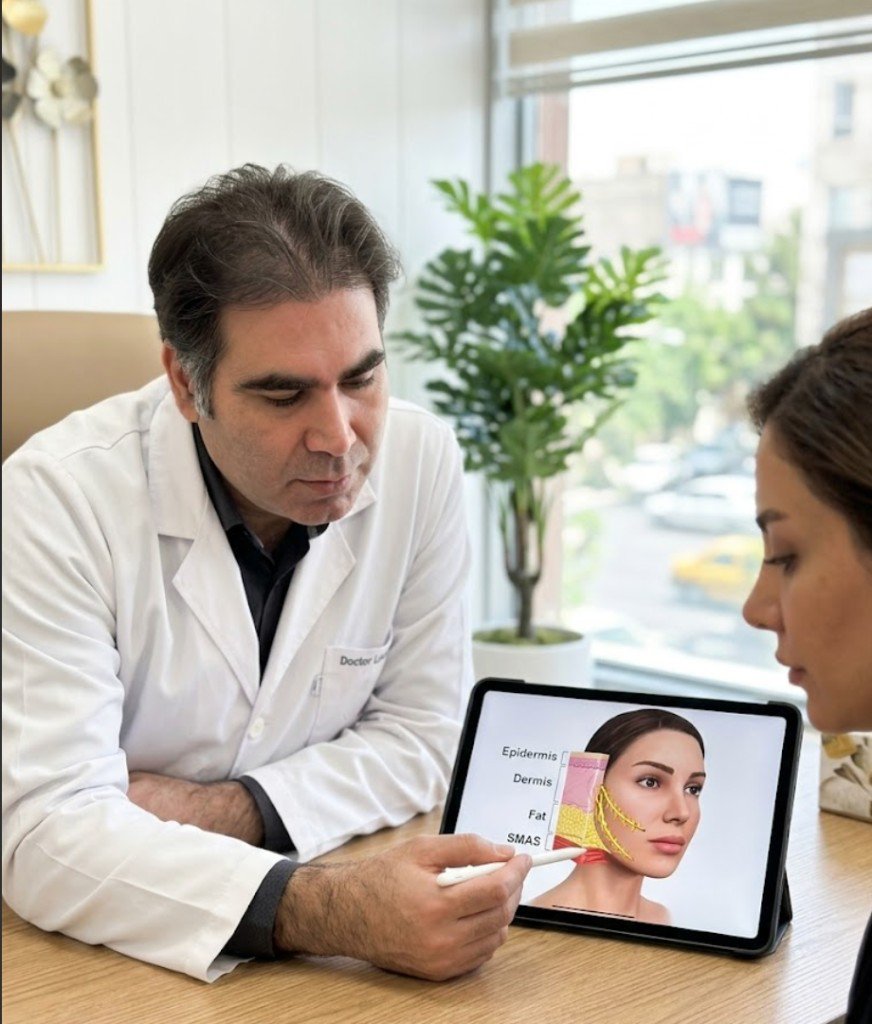
How Does a Thread Lift Work?
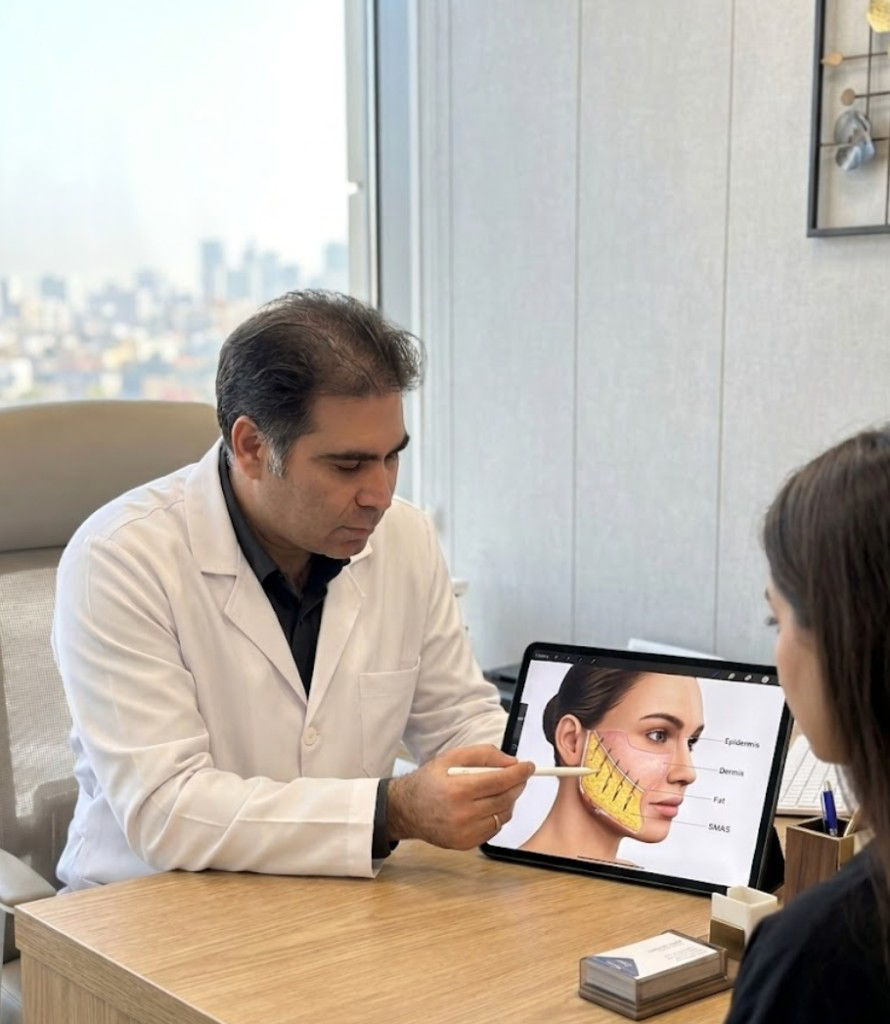
Two main mechanisms explain the result.
1. Mechanical effect
Barbed (cog) threads have tiny teeth along their length that engage subcutaneous tissue. When placed at a planned angle and gently tensioned, the lax tissue is repositioned upward and backward, creating an immediate lift.
2. Biological effect (biostimulation)
Inserting a thread creates a very mild, controlled tissue response that the body treats like a tiny wound. Fibroblasts — cells that produce collagen and elastin — become more active. Skin often becomes firmer and slightly thicker over the following months, even after the thread itself has dissolved.
Many patients do not realize that the clinical “result” can outlast the physical presence of the thread, because the new collagen framework remains after absorption.
Biologically, this is a mild, controlled foreign-body response: local immune cells start healing, with new micro-vessels and collagen deposition around the thread path. More durable tissue responses — as often seen with PCL — tend to produce stronger biostimulation; slower-absorbing threads frequently stimulate collagen more intensely.
PDO, PLLA, and PCL absorb at different rates and stimulate collagen to different degrees, as covered next.
Thread Types: PDO, PLLA, and PCL
Choosing the thread type is one of the most important treatment-planning decisions.
PDO (polydioxanone)
PDO threads are the most common and longest-used option in this field. The material has a long safety record in cardiac and internal sutures. PDO usually absorbs in about 6–8 months and provides a noticeable immediate lift. It is often preferred for mild laxity and preventive treatment in younger patients.
PLLA (poly-L-lactic acid)
PLLA absorbs more slowly than PDO — typically 12–18 months — and is used more for gradual tissue volume and skin-quality improvement, with stronger biostimulation than PDO.
PCL (polycaprolactone)
PCL is a newer absorbable generation with a more complex molecular structure and greater resistance to hydrolytic breakdown. Full absorption often takes 18–24 months. Comparative animal studies have reported denser collagen responses versus PDO and PLLA. PCL is often chosen for moderate laxity when longer durability is desired.
Thread design: mono, cog, and screw
Beyond material, physical design matters:
- Mono (smooth) threads have no barbs and are used mainly for collagen stimulation and skin texture, usually in a mesh pattern — not for strong mechanical lift.
- Cog / barbed threads grip tissue and enable direct mechanical lift.
- Screw threads wrap around a central strand and are mainly used for local volume and texture in smaller zones such as around the mouth.
Any of PDO, PLLA, or PCL can be manufactured in these designs, so “thread type” means both material and design, chosen for the clinical goal.
Comparison table
| Feature | PDO | PLLA | PCL |
|---|---|---|---|
| Full absorption time | About 6–8 months | About 12–18 months | About 18–24 months |
| Immediate mechanical lift | High | Moderate | High |
| Collagen stimulation | Moderate | High | High |
| Best for | Mild laxity, preventive use | Gradual skin quality & volume | Moderate laxity, longer durability |
| Approximate result duration | About 6–12 months | About 12–18 months | About 18–24 months or more |
*Real longevity varies with age, skin quality, lifestyle, and number of threads used. Figures above are averages reported in the scientific literature, not a treatment guarantee.*
Final thread selection should be made in consultation with a physician based on your facial anatomy and goals.
Clinic path: Thread type is chosen after examination. For consultation, a treatment plan, and booking, go to the thread lift service page.
Treatable Areas
Thread lifts can be used in several face and neck zones; area and thread count must be individualized.
Jawline
Aging soft tissue around the chin softens jawline definition. Barbed threads are often placed in an upward-and-backward oblique path to redefine the line.
Cheeks
Cheek descent is a common aging concern. Threads often enter near the hairline or temple and lift cheek tissue upward and backward.
Neck
Neck skin is thinner and more delicate. Threads can improve mild-to-moderate laxity, but for significant sagging a surgical neck lift usually lasts longer.
Brows
For mild brow descent and a more open eye appearance without blepharoplasty, threads can be appropriate. See also the eyebrow lift guide.
Midface
The under-eye to upper-cheek zone is anatomically sensitive and requires high precision because of nearby nerves and vessels.
Lower face
Includes nasolabial folds and the perioral area, often treated with finer threads and sometimes combined with filler.
Each zone needs a different thread count, type, and vector — determined only after careful in-person or online assessment.
Who Is a Good Candidate?
According to medical sources, strong candidates usually share these traits:
- Roughly late 30s to early 60s
- Mild-to-moderate facial tissue laxity (not severe)
- Skin thick and elastic enough to hold threads
- Realistic expectations — gradual, natural improvement, not a dramatic change
- Relatively stable body weight before and after treatment
- No medical conditions that conflict with the procedure
Younger patients with early laxity may use threads preventively. With more advanced descent, combining threads with other treatments — or choosing surgery — often works better.
Who Is Not a Good Candidate?
Thread lifting is not for everyone. People who are often poor candidates include:
- Those with severe tissue laxity or large excess skin — surgery usually serves them better
- Active autoimmune disease or clotting disorders
- Active skin infection or inflammation in the treatment area
- Pregnancy or breastfeeding
- History of keloid or hypertrophic scarring
- Recent facial surgery that has altered tissue anatomy
- Significant ongoing weight loss or gain
Final suitability is decided only after a specialist consultation and full medical history review.
These limits exist for clear reasons: pregnancy and breastfeeding affect healing and hormones; autoimmune and clotting disorders raise inflammatory or bleeding risk; scarred or surgically altered tissue makes outcomes less predictable. A physician’s honesty in declining an unsuitable candidate matters as much as technical skill.
Thread Lift vs Surgical Facelift
Patients often ask how threads compare with surgical facelift. The goals overlap, but invasiveness, longevity, and result intensity differ.
| Criterion | Thread Lift | Surgical Facelift |
|---|---|---|
| Anesthesia | Local | General or deep sedation |
| Incisions | None | Yes (usually near hairline and ear) |
| Procedure time | 30–60 minutes | Several hours |
| Recovery | A few days | Several weeks |
| Result intensity | Mild to moderate, gradual | More dramatic and immediate (after swelling settles) |
| Longevity | About 1–2 years | Several years (deep-plane often 8–10+ years) |
| Best candidate | Mild to moderate laxity | Moderate to severe laxity |
A thread lift is not a replacement for surgical facelift. It is a middle or complementary option for people who are not yet surgical candidates, or who cannot or prefer not to have surgery. One-year satisfaction rates in studies are often relatively high when expectations were realistic beforehand.
Thread Lift vs Filler
Hyaluronic acid fillers and thread lifts are both non-surgical but work differently. Filler mainly restores lost volume (cheeks, under-eyes), while threads mainly lift lax tissue and stimulate collagen. When both descent and volume loss are present, combining them can look more harmonious — a decision made in specialist consultation.
Thread Lift vs HIFU
HIFU (High-Intensity Focused Ultrasound) heats the SMAS layer — the same deep plane targeted in surgical facelifts — to tighten tissue gradually. Unlike threads, HIFU places nothing under the skin. Results are usually gentler and slower; threads often give a more immediate lift sensation. Some patients use both as complements.
Thread Lift vs Radiofrequency (RF)
RF microneedling combines fine needles with radiofrequency energy aimed at superficial-to-mid dermal layers. It is better for skin texture, pores, acne scars, and fine wrinkles than for true lift of descended tissue. Threads engage deeper tissue and are generally more effective for real laxity. Goals differ; some plans combine both.
Which option is right for you?
Choice among threads, filler, HIFU, RF, or surgical facelift depends on three factors: how much tissue has descended, your primary goal (mechanical lift, volume, or skin quality), and how much downtime and invasiveness you accept. The best plan is often a targeted combination, decided in an individualized assessment — not by the popularity of a device name. See also the non-surgical rejuvenation guide.
Step-by-Step Treatment
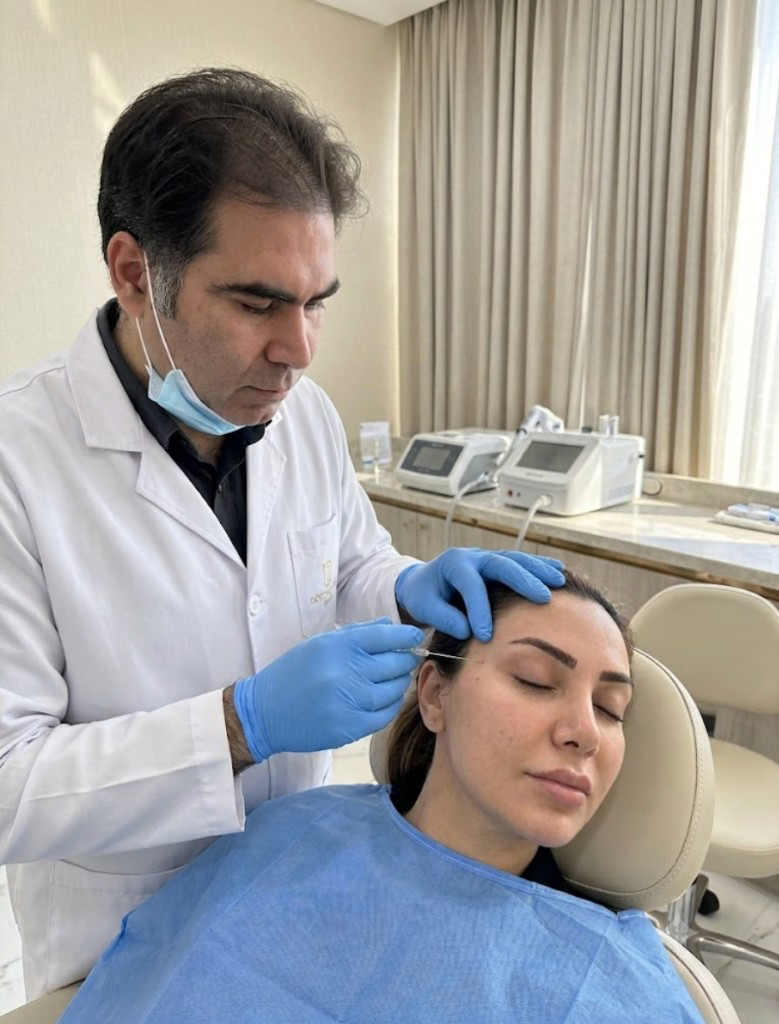
A typical thread lift follows these steps:
1. Consultation and assessment: skin quality, degree of laxity, and suitability. 2. Treatment mapping: entry points, vectors, thread count and type. 3. Skin preparation and disinfection to reduce infection risk. 4. Local anesthesia: injection or topical cream. 5. Thread placement with needle or cannula along planned paths. 6. Tensioning and fixation of tissue. 7. Final symmetry check before ending the session.
Depending on goals, threads may be placed in linear, fan, mesh, or cross-hatch patterns. Some advanced centers use ultrasound to visualize subcutaneous layers in sensitive midface zones.
The session usually lasts 30–60 minutes, and most patients return to light daily activity the same day.
Recovery: Day by Day and Week by Week
Days 1–3
Swelling, mild bruising, and a tight or slightly sore sensation are most common. Most people resume light daily activities in this window.
First week
Swelling and bruising gradually improve. Mild tightness may remain.
Weeks 2–4
Most visible signs settle and the early lift becomes clearer. Heavy exercise and facial massage are usually limited until this stage.
Months 1–3
Collagen stimulation continues; firmness and skin quality often improve gradually.
Months 3–6
Final results usually become fully apparent as collagen remodeling peaks.
Pace varies with skin type, thread material, and aftercare adherence.
Results, Timing, and Longevity
Unlike surgical facelift, thread-lift results appear in two phases.
Immediate effect
Mechanical lift is visible right after treatment, though temporary swelling can mask it for a few days.
Gradual effect
Over 3–6 months, collagen stimulation firms and thickens the skin further.
Studies report roughly 6–12 months for PDO, 12–18 months for PLLA, and up to 24 months or more for PCL. Real longevity still depends on age, lifestyle, sun exposure, and baseline skin quality. Many patients schedule maintenance sessions to preserve results long term.
Clinic path: When you are ready to close candidacy and a treatment plan, go to the thread lift service page or book a consultation.
Risks and Possible Complications
No medical procedure is risk-free. Systematic reviews show most thread-lift adverse events are mild and temporary.
Common (usually self-limited)
- Swelling — most frequently reported, roughly 16–35% depending on the study
- Bruising (ecchymosis) — roughly 19–26%
- Mild local pain or tenderness
- Temporary tightness
Less common
- Skin dimpling — about 10%
- Temporary paresthesia or numbness — about 6–10%
- Visible or palpable thread — about 4–6%
Rare but more serious
- Infection — about 2%
- Thread extrusion
- Asymmetry
- Very rarely, injury to vessels or salivary glands
Most events are self-limited and manageable with simple care. Serious complications are reduced by proper patient selection, anatomy knowledge, and technique. Still, zero risk does not exist, and patients should understand these possibilities before deciding.
What Affects Thread Lift Cost (Educational)
A single fixed price for every patient is not accurate. Cost usually depends on thread type (PDO / PLLA / PCL), thread count, treated zones, physician expertise, and possible maintenance sessions. Public “average” figures mislead when read as a case quote. For a personalized estimate and booking path, use the thread lift service page or book a consultation.
Frequently Asked Questions
Common questions — pain, naturalness, combining with Botox or filler, mono vs cog threads, and more — are answered in the FAQ section of this page.
Scientific Sources
This guide draws on systematic reviews and peer-reviewed papers including:
- Kang SH, et al. A Meta-Analysis and Systematic Review of the Incidences of Complications Following Facial Thread-Lifting. Aesthetic Plastic Surgery, 2021. PMID: 33821308.
- An Assessment and Comparison of Adverse Effect Rates in Differing Absorbable Thread Lift Suture Materials, 2024. PMID: 39442180.
- Safety Profile of Thread Lifts on the Face and Neck: An Evidence-Based Systematic Review, Dermatologic Surgery, 2021. PMID: 34699439.
- Update on Absorbable Facial Thread Lifts, 2025. PMID: 39662017.
- A meta-analysis of complications of thread lifting, Frontiers in Surgery / medRxiv, 2025–2026.
- Enhancing dermal collagen density towards youthfulness: A comparative study of PCL, PLLA, and PDO thread implantation in aging rats model, PMC, 2024.
- Is More Always Better? A Randomized Comparative Clinical Trial About the Impact of Polydioxanone Threads Quantity for Facial Lifting, Aesthetic Surgery Journal Open Forum, 2025.
- American Society of Plastic Surgeons (ASPS) — patient guidance on thread lift.
*Figures cited are averages from international medical literature and may differ slightly from any single clinic’s experience.*
Ready to review your case?
The next best step for a personalized treatment plan is an in-person consultation.
Clinic path on the thread lift service page · Book with Dr. Charaghipour
Frequently Asked Questions
Is a thread lift painful?
With local anesthesia, most patients report only mild pressure or tugging — not severe pain.
How natural do thread-lift results look?
When performed correctly, results should look soft and natural — not pulled or artificial.
Does thread lift work on oily or thick skin?
Yes, though the visible effect on thicker skin may differ slightly from thinner skin.
How many threads are needed in one session?
Thread count depends on laxity and treated area and is decided in consultation. Some studies show simply adding more threads does not necessarily improve long-term results.
Can thread lift be combined with Botox or filler?
Yes. Combining these treatments is common in many plans and can create a more harmonious result.
Does thread lift leave scars?
Entry points are tiny and usually leave no visible mark, except in patients prone to scarring.
How long should I avoid facial massage after a thread lift?
Usually several weeks of avoiding massage or direct pressure on the treated area; exact timing is set by your physician.
Is thread lift suitable for men?
Yes. It is not gender-limited and is planned according to anatomy and individual goals.
Can a thread extrude through the skin?
It is uncommon but reported, especially with incorrect technique or very thin skin.
When should treatment be repeated?
Depending on thread type and individual response, usually about 1–2 years after the first session.
Can thread lift treat the neck?
Yes, though for severe neck laxity a surgical neck lift usually lasts longer.
What is the difference between barbed and smooth threads?
Barbed (cog) threads are mainly for mechanical lift; smooth (mono) threads mainly stimulate collagen and improve skin texture.
Can thread lift be done under the eyes?
Yes in the midface zone, though tissue delicacy there requires high expertise and precision.
Can I wear makeup after a thread lift?
Heavy makeup on the treated area is usually avoided for the first few days.
How does thread lift differ from microneedling?
Microneedling mainly targets superficial skin; thread lift engages deeper tissue and creates a true lifting effect.
Does thread lift permanently change the face?
No. Effects are temporary; after they fade, natural aging continues unless treatment is repeated.
Who should not have a thread lift?
People with severe tissue laxity, active autoimmune disease, active skin infection, or pregnancy are usually not good candidates.
Does thread lift affect facial fat?
It mainly targets tissue and skin, not fat. For lost volume, facial fat grafting is usually more appropriate.