


After Thread Lift or HIFU: What If the Result Was Not Enough?
This is educational content. Treatment planning, case assessment, and booking belong on the face lift service page — not in this article.
If you had a thread lift or HIFU and feel the change you expected did not happen, the next step is not automatically to repeat the same treatment or go straight to surgery. Many people ask: “Can I have a facelift later?”, “Will the previous treatment affect future surgery?”, or “Does a weak result mean the treatment failed?”
This article is not a personal diagnosis. It explains what matters when a non-surgical tightening treatment did not meet your expectations; what information helps at consultation; and when surgical facelift planning may — or may not — be part of the conversation.
If I did not get the result I wanted, what should be clarified first?
Before any decision about the “next step,” be clear about what you are unhappy with. “Not enough result” is not a diagnosis.
Consider: what change did you expect versus what you see; when did the concern start; whether you have worrying symptoms or only aesthetic dissatisfaction; and whether the main issue is tissue laxity or something else such as volume loss or skin quality.
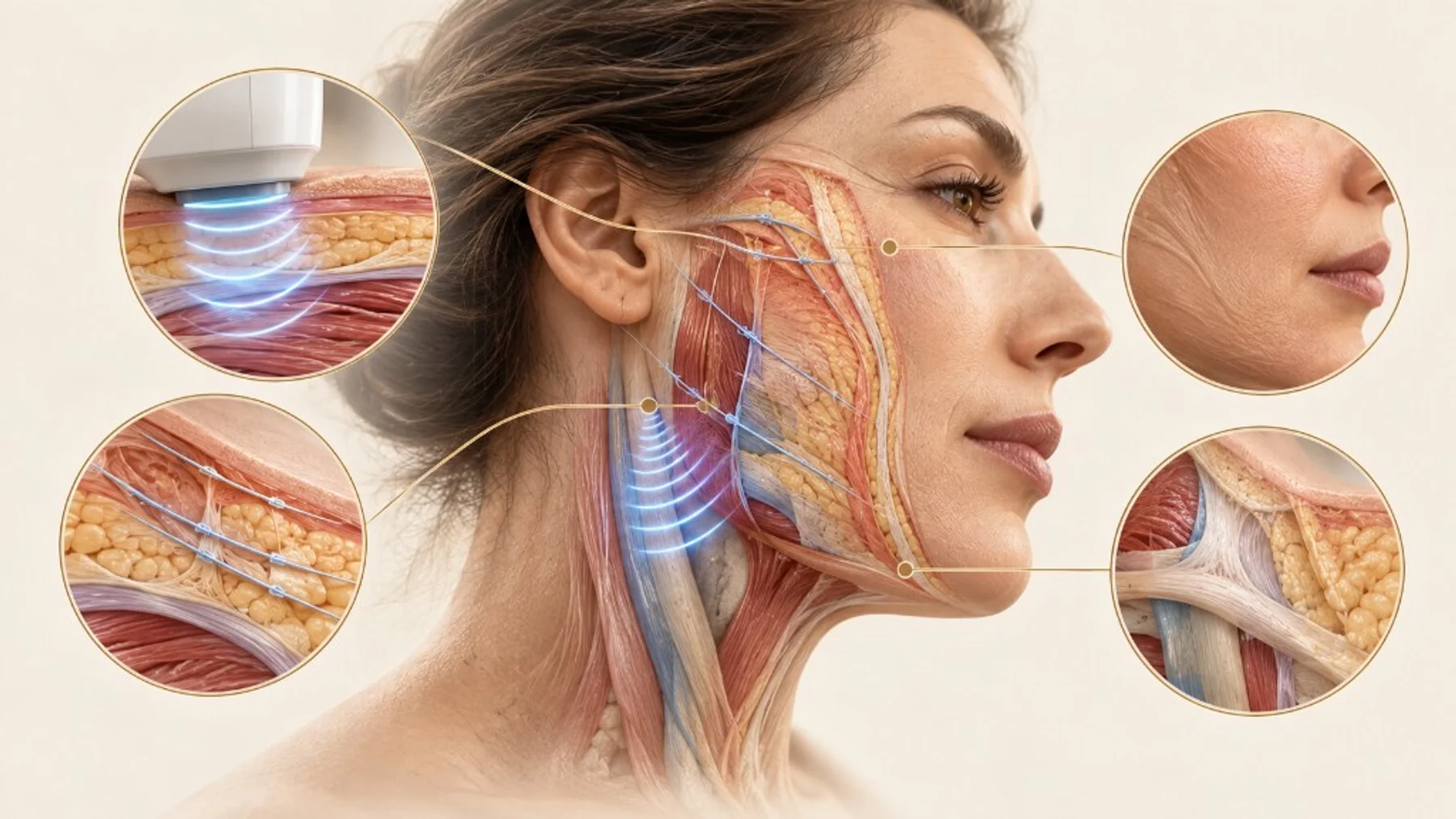
Until the reason for dissatisfaction is clearer, repeating treatment, switching methods, or planning surgery is guesswork.
Does an insufficient result always mean treatment failed?
Less improvement than hoped for
is not the same as a treatment complication.
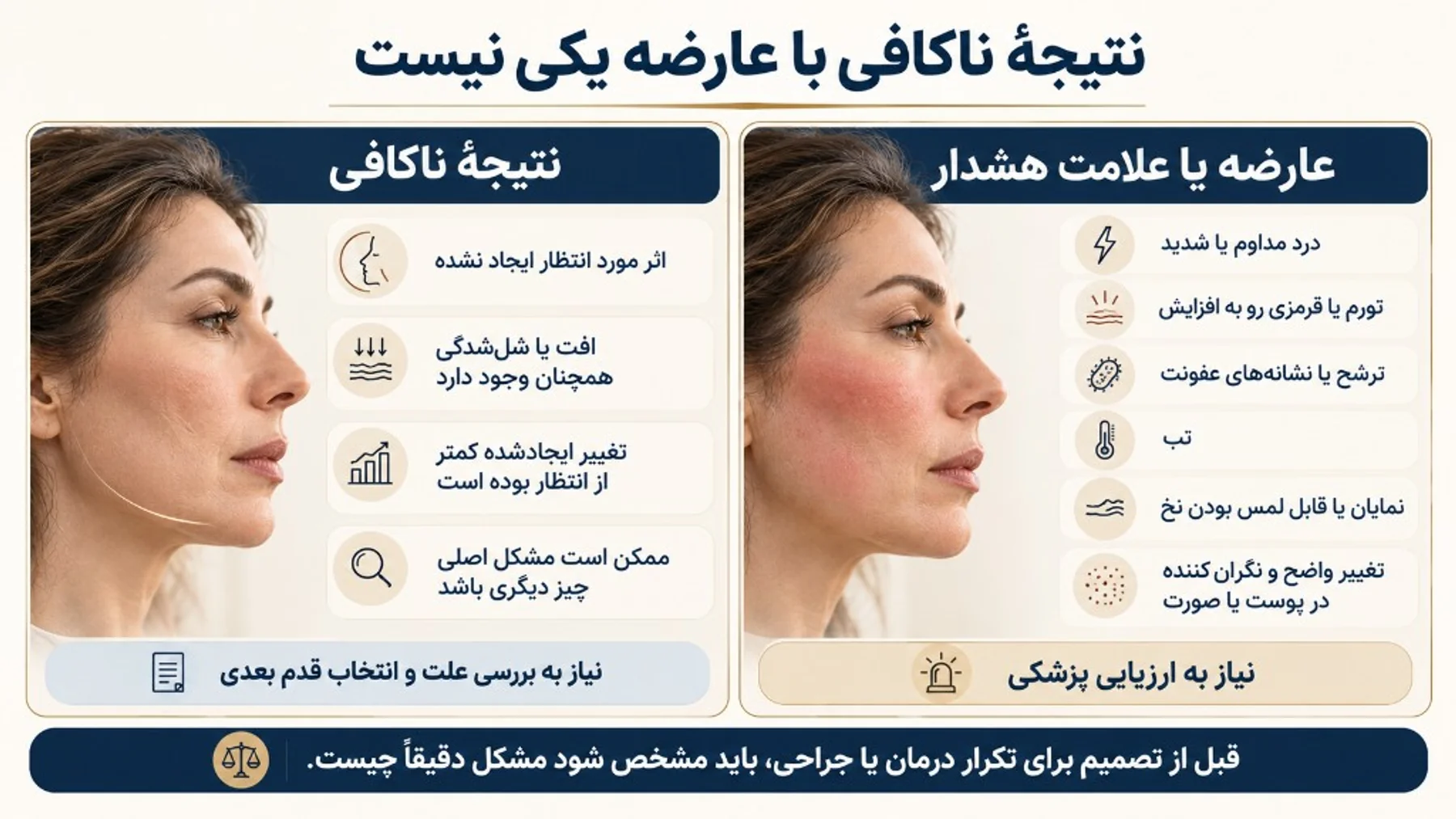
Limited aesthetic gain can reflect the inherent limits of thread lift or HIFU, choosing a method that did not match the underlying problem, temporary improvement that faded, concurrent aging or lifestyle change, or a gap between expectation and what the procedure can do.
Persistent pain, unusual swelling, infection, or visible or palpable threads are not simply “I did not get enough lift.” They need clinical assessment first.
For background on non-surgical options, see thread lift, HIFU vs facelift, and the non-surgical facelift guide. This page is about what to do when results were insufficient.
Can you have a facelift after HIFU?
In general, prior HIFU alone is not an absolute barrier to facelift surgery.
Many people who have had energy-based tightening can be assessed for a facelift if anatomy and goals fit.
What matters is that prior treatment history is included in surgical consultation and planning: timing, treated areas, number of sessions, and any lasting symptoms. There is no universal fixed waiting period for everyone; timing depends on the device, depth, areas, individual healing, and whether active swelling or stiffness remains.
HIFU does not automatically “ruin” tissue or make future surgery impossible, but any prior treatment can influence operative planning and should be reported clearly.
Can you have facelift surgery after a thread lift?
In many cases, prior thread lift does not prevent facelift surgery
— but this cannot be answered definitively without case details.
The surgeon needs to know when threads were placed, which areas were treated, what type of procedure was used if known, whether complications occurred, whether threads remain palpable or visible, and what symptoms persist.
Threads do not always need to be removed before surgery; that depends on thread type, location, timing, and clinical findings. It is also incorrect to claim every thread makes surgery impossible. Examination is required.
Should I repeat threads or HIFU, or consider a facelift?
There is no single path for everyone.
The choice depends on the real problem, not on which option is “better.”
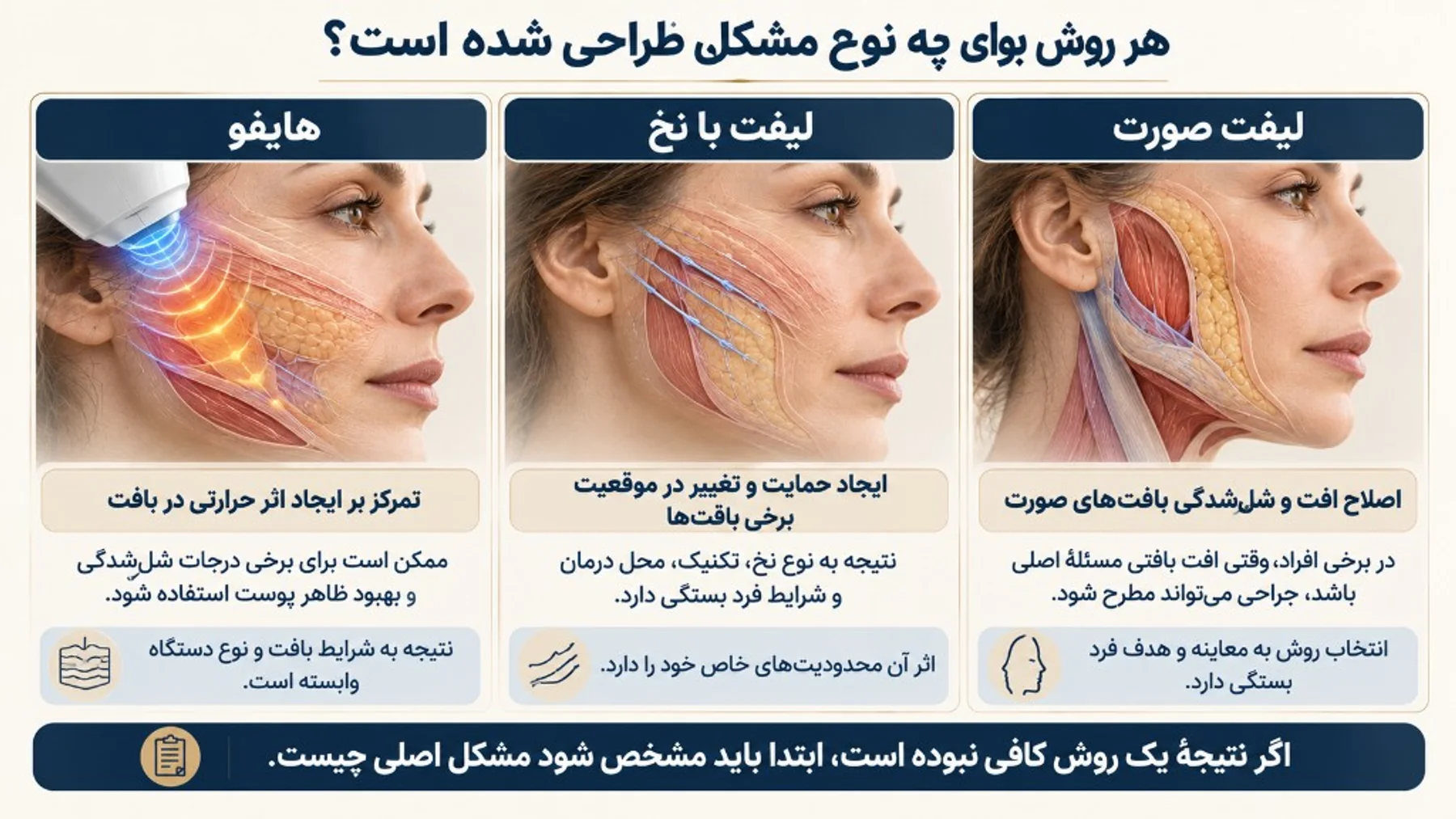
Mild laxity with good skin quality may lead to another non-surgical option or skin care. Moderate to severe structural descent may bring surgical facelift into discussion. Volume loss may point to volume strategies rather than repeating surface tightening. Complications need medical assessment first, not only a cosmetic switch.
Repeating HIFU or threads can be reasonable in some cases. Facelift is discussed when laxity exceeds what non-surgical methods can realistically address and the patient is prepared for surgery, recovery, and its limits.
When might facelift surgery be discussed?
Facelift enters the conversation when structural laxity of face and neck is the main concern and the expected surgical improvement matches current anatomy and goals.

After thread lift or HIFU, this often becomes relevant when non-surgical improvement was within realistic limits but meaningful laxity remains, descent is deeper than threads or energy can correct, early gain faded with time, or the goal is a more structural change.
If the main issue is volume, severe skin quality, or expectations beyond what a lift does, facelift is not automatically the next step. See facelift candidacy for the general frame.
What information should I bring about prior thread lift or HIFU?
1. Approximate treatment date(s) 2. Device or treatment name if known 3. Treated areas 4. Thread type and approximate number, if applicable 5. Number of sessions 6. Before-and-after photos if available 7. Lasting symptoms or complications 8. Recent injectables or other aesthetic treatments 9. Prior provider name if you wish to coordinate records 10. Your goal for this visit

When should I seek assessment after prior treatment?
There is no one timeline for everyone.
Early weeks and months often include swelling, stiffness, or temporary change; planning surgery or repeat treatment on a moving target is unreliable. Once the treatment effect has stabilized for that individual, judgment about sufficiency becomes more meaningful. Warning symptoms should be assessed promptly, not deferred for “aesthetic settling.”
Which symptoms need medical assessment?
Do not confuse these with weak aesthetic outcome: persistent or severe pain; worsening or persistent swelling, redness, or warmth; discharge or infection signs; fever; visible or extruding thread material; unusual persistent dimpling or bulging; sudden focal weakness or numbness; rapidly worsening asymmetry.
This list is not complete. For surgical risk context see facelift risks.
Conclusion
Prior thread lift or HIFU does not by itself determine the next treatment. Clarify whether you are dealing with method limits, expectation gap, a different underlying problem, or a true complication. Facelift after HIFU or threads is discussable in many cases but requires examination and realistic goals. Not everyone who was dissatisfied with non-surgical treatment needs surgery.
Book a consultation to review your case
Frequently Asked Questions
Can you have a facelift after HIFU?
In general, prior HIFU alone is not an absolute barrier. Treatment history must be included in consultation; timing is individual and there is no universal fixed number for everyone.
Can you have facelift surgery after a thread lift?
In many cases yes, but it is not definitive without examination and case details. The surgeon needs timing, areas, thread type, complications, and whether threads remain.
If thread lift did not work, should I get threads again?
Not necessarily. Repeat treatment may be discussed for mild laxity within non-surgical limits. Deeper descent or a different underlying problem may not be solved by repeating threads.
Can HIFU affect future facelift surgery?
Prior HIFU matters in surgical planning but does not automatically destroy tissue or make surgery impossible. Clear reporting of timing, areas, and symptoms is important.
How long should you wait to assess results after HIFU or threads?
Stabilization time varies by person and method. Early weeks and months may include swelling and temporary change. Judging the next step usually makes sense once the effect has stabilized for that individual; there is no universal number.
Does everyone dissatisfied with threads or HIFU need a facelift?
No. Some need another non-surgical option, skin care, volume strategies, or expectation adjustment. Facelift is discussed when structural laxity is the main concern and surgery aligns with realistic goals.