
Face Washing After Facelift | Timing and Proper Technique
Washing your face after a facelift is a normal part of postoperative care, but the exact start time is not the same for every patient. It depends on procedure type, incision sites, dressing status, and your surgeon’s instructions.
For the full recovery guide — sleep, swelling, diet, activity, and return to daily life — see the facelift aftercare guide. This article focuses only on face washing.
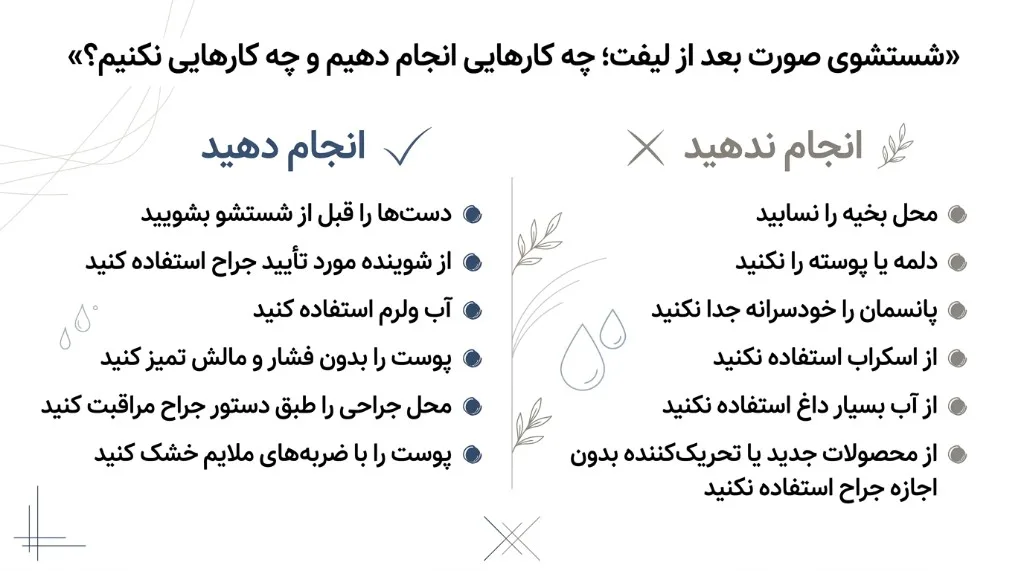
> Short answer: When to start washing depends on surgery type, wound status, and surgeon approval. Once cleared, use an approved gentle cleanser, avoid rubbing or pressure, and pat dry.
When can I wash my face after a facelift?
There is no universal day count. Some protocols allow gentle washing relatively early; others wait until the first visit, especially with drains, dressings, or specific incisions. Follow your surgeon’s written or verbal orders — not a generic number from the internet.
How should I wash my face after a facelift?
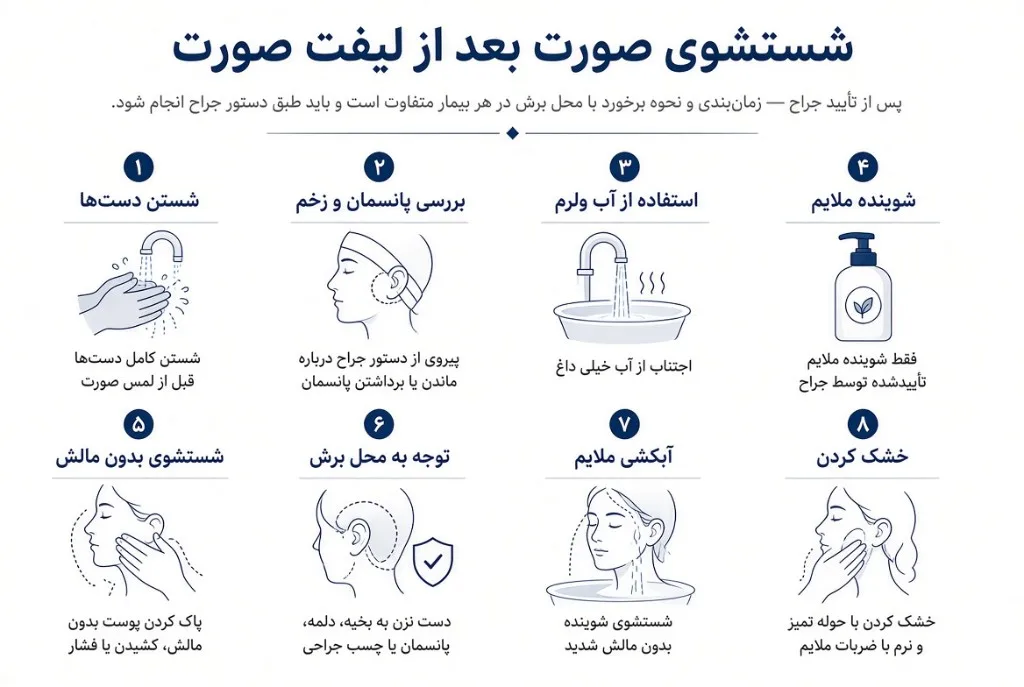
1. Wash hands thoroughly. 2. Check dressing/wound status per surgeon instructions. 3. Use lukewarm water and an approved gentle cleanser. 4. Clean with very light motions — no rubbing or pulling.

5. Manage incision lines only as directed. 6. Rinse gently. 7. Pat dry with a clean soft towel — do not rub. 8. Do not introduce new unprescribed products.
What cleanser should I use?
A mild, fragrance-free cleanser approved by your surgeon. Avoid scrubs, exfoliants, retinol, strong acids, alcohol-heavy or heavily scented products until cleared.
Can I wash over sutures and incisions?
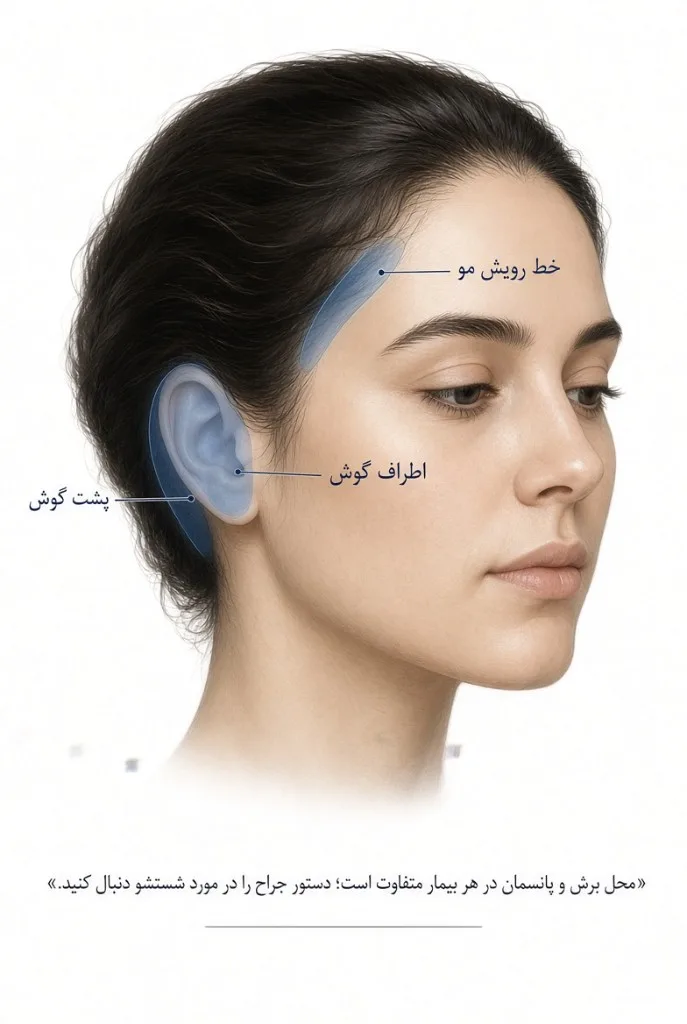
This varies by suture type, dressing, and surgeon. Do not pick scabs, remove dressings without permission, or guess whether the area may get wet — ask your team.
Lukewarm water, towel drying, hair washing, and bathing
Prefer lukewarm water over very hot water. Pat dry only. Face washing, hair washing, and full bathing may be allowed on different timelines — confirm each with your surgeon.
When to call your surgeon
Contact your team for unusual bleeding, foul drainage, wound opening, worsening pain/swelling, fever, or severe skin reaction after washing.
After-wash skin care
Pat dry, use moisturizer/sunscreen only if approved, and avoid active ingredients until your surgeon allows. Full recovery skincare belongs in the aftercare guide.
Checklist
- Confirmed start time with surgeon
- Washed hands first
- Checked dressing per instructions
- Used approved fragrance-free cleanser
- Washed gently without rubbing
- Did not scrub or pick incisions
- Patted dry gently
- Avoided new irritating products
Frequently Asked Questions
How many days after a facelift can I wash my face?
There is no fixed number for everyone. Start time depends on surgery type, incisions, dressing status, and your surgeon’s individual instructions.
Can washing my face after a facelift open the sutures?
Gentle washing per surgeon approval is usually compatible with wound care, but timing and technique must follow your surgeon. Early washing, pressure, or rubbing can cause problems.
What cleanser is best after a facelift?
A mild, fragrance-free cleanser approved by your surgeon. Avoid scrubs, exfoliants, and active-ingredient products in the early recovery period.
Can I take a bath after a facelift?
Full bathing is usually allowed later than face washing because it depends on overall wound healing. Ask your surgeon for the exact timing.
Can I wash over the suture line?
It depends on suture type, dressing, and surgeon instructions. Do not wet or manipulate the incision without explicit approval.
Is hot water harmful after a facelift?
Very hot water can irritate sensitive postoperative skin; lukewarm water is usually preferred.
What if my dressing gets wet after a facelift?
Do not remove or replace it on your own. Gently dry around it and contact your surgical team.