
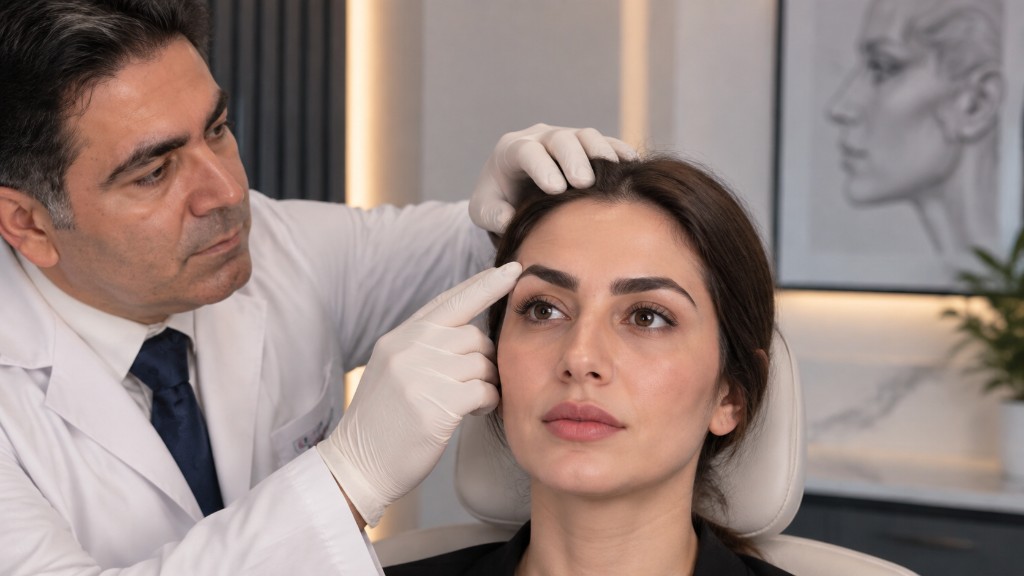
Brow Lift vs Forehead Lift: What Is the Difference?
This is an educational article. For service details and treatment planning, see the eyebrow lift and forehead lift service pages.
Brow lift and forehead lift are terms often used interchangeably, but in surgical assessment they are not always the same concept. A brow lift focuses more on brow position and shape, while a forehead lift can also address forehead tissue and lines in addition to the brows.
In practice, the boundary between the two is not always fixed. The scope of correction and surgical technique depend on individual anatomy, degree of brow ptosis, and treatment goals — which is why the terms overlap to some extent in medical literature and clinical use.
Below we examine how the two differ, when each is considered, and what guides the choice between them.
What is a brow lift?
A brow lift primarily aims to correct brow position, height, and shape. It is usually considered when the brows have descended or their form has changed over time.
Depending on technique, tissues around the brow and forehead are repositioned so brow position and shape change. Because the brows strongly affect gaze and facial expression, changing their position can also affect the upper face — including a relatively more open space above the eyes in some patients.
A brow lift does not necessarily mean extensive change across the entire forehead. Its scope can be more limited to the brow itself, though some techniques involve a wider area.
What is a forehead lift?
A forehead lift is usually planned to address a set of changes in the forehead and brow region, though the actual treatment scope depends on technique and individual needs.
Skin and underlying forehead tissue are repositioned and re-secured. This can affect horizontal forehead lines and brow position, though the degree depends on technique and skin condition.
Skin, underlying tissue, and brow position in the forehead are closely linked. Change in one area often affects others — a main reason brow lift and forehead lift overlap clinically.
Main differences between brow lift and forehead lift
The main difference lies in treatment scope: brow lift usually centers on brow position; forehead lift can also cover forehead tissue and lines.
| Criterion | Brow lift | Forehead lift | |---|---|---| | Primary focus | Brow position and shape | Combined forehead and brow changes | | Area of attention | Brow and surrounding tissue | Forehead and its relationship to the brow | | Effect on forehead lines | Depends on technique and individual | Depends on technique and line cause | | Scope of correction | Variable | Variable | | Dependence on individual anatomy | High | High |
This table is a general framework, not a fixed boundary. Final choice still depends on individual surgical assessment.
Is a brow lift the same as a forehead lift?
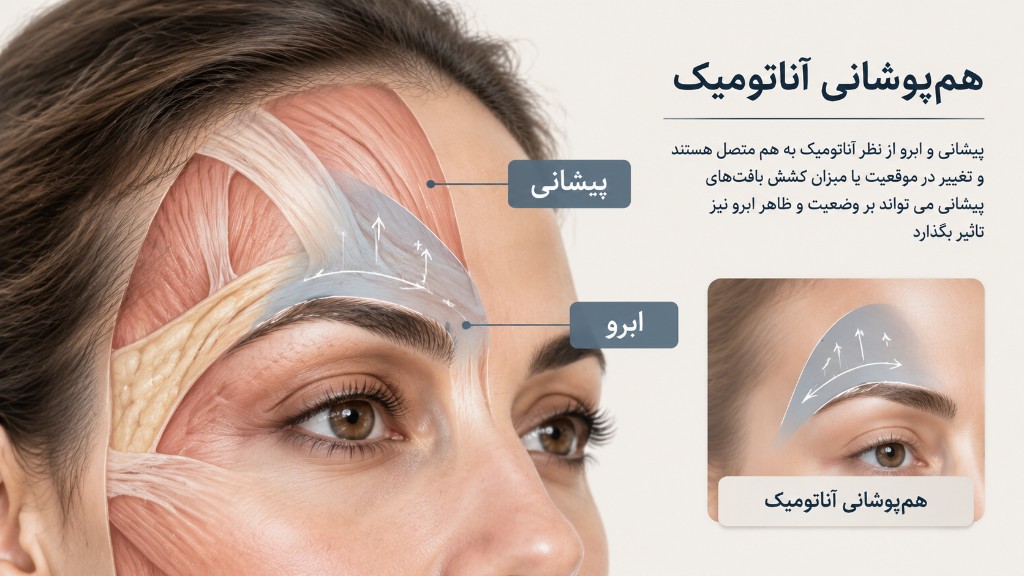
Not entirely, but the terms are not completely separate either. In some techniques and clinical contexts they share overlapping treatment scope.
Overlap relates to close anatomic links between forehead and brow and to differences among surgical techniques. In medical literature, brow lift and forehead lift may overlap depending on technique and treatment range.
The procedure name alone cannot define exact correction scope. What matters is the chosen technique, incision placement, and goals set at surgical assessment.
Who is a brow lift considered for?
A brow lift is usually evaluated when a patient shows brow ptosis or brow shape change — based on clinical examination, not a fixed rule for everyone.
Situations that may lead to brow lift evaluation include:
- General or partial brow descent
- Lateral brow lower than the medial brow
- Brow shape change over time
- A sense of heaviness in the upper face in some patients
None of these alone determines candidacy; in-person assessment is required.
Does brow ptosis always mean a brow lift is needed?
Not necessarily. The appearance of brow drooping can have several causes, and brow lift is only one option in surgical evaluation.
Sometimes what looks like brow ptosis is actually due to upper eyelid tissue changes or forehead anatomy rather than true brow position. The surgeon must identify the source before any decision. Whether the issue is brow, eyelid, or forehead requires clinical examination — not appearance alone.
Who is a forehead lift considered for?
A forehead lift is usually discussed when forehead changes and brow position matter together. Brow correction alone may not fully meet the patient's goals.
It may be considered when horizontal forehead lines, forehead skin changes, or broader forehead heaviness accompany brow concerns. Final choice of the better approach depends on surgical assessment.
Difference in aesthetic outcome
Outcome for both procedures depends on technique, anatomy, extent of correction, and skin characteristics — not one predictable result for everyone.
Brow lift change is mainly in brow position and shape. Forehead lift can affect both brow position and forehead lines, but the exact degree depends on skin quality and soft-tissue thickness.
Does a forehead lift remove forehead lines?
A forehead lift can improve the appearance of some forehead lines, but complete removal of all lines cannot be stated as a guaranteed outcome.
Forehead lines usually result from muscle activity, skin condition, and underlying tissue. Forehead lift mainly affects tissue repositioning and skin tension; lines driven mainly by muscle activity may partially remain. Improvement depends on technique and individual factors.
Does a brow lift affect the upper eyelid?
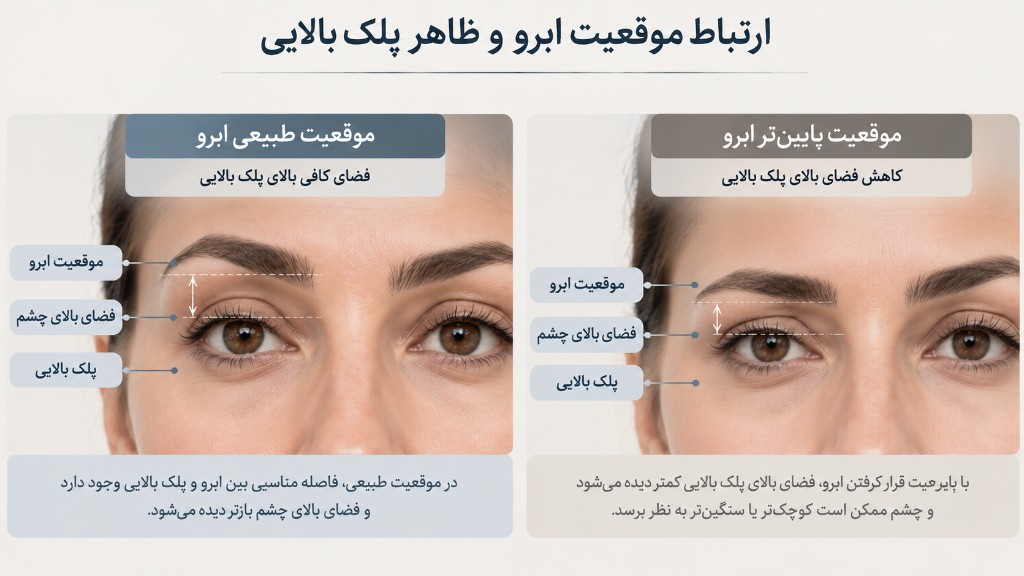
Brow position and upper eyelid appearance are related to some degree, but brow lift is not the same as upper eyelid surgery.
When the brow descends, it can reduce space above the eye and mimic eyelid drooping. Correcting brow position may change part of that appearance. However, upper eyelid surgery (blepharoplasty) has separate goals and assessment focused on eyelid tissue, not brow position. Determining whether the issue is brow or eyelid requires careful examination.
Is brow lift or forehead lift better?
Neither is universally better for everyone. Choice depends on the main concern, anatomy, degree of brow ptosis, forehead condition, and treatment goals.
If the primary concern is brow position alone, brow lift may be discussed. If forehead lines and broader tissue changes also matter, forehead lift may be more appropriate. The decision must be individual, not a general rule.
How is the more appropriate method determined?
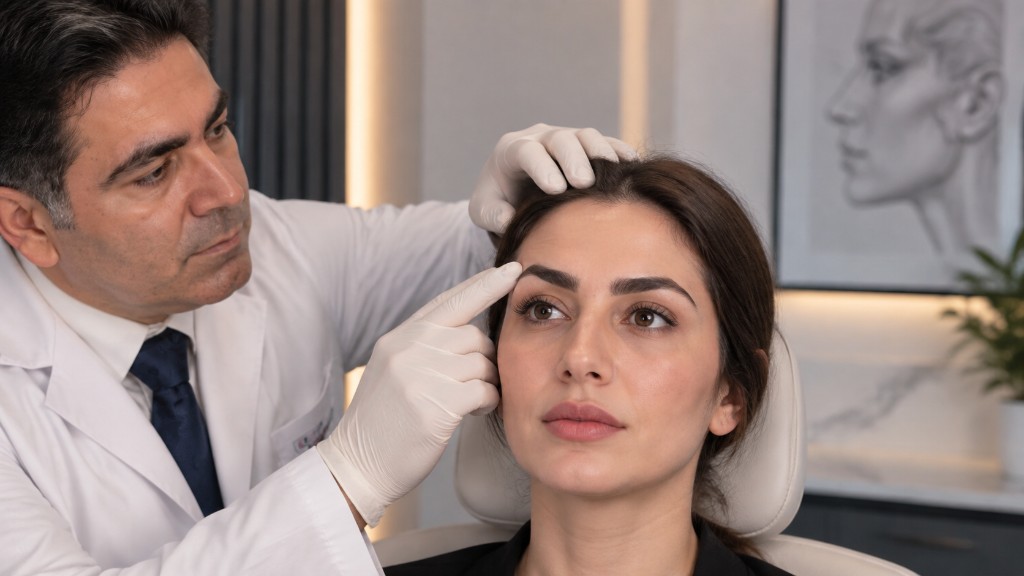
Appropriate method is usually determined after reviewing several clinical factors — not personal preference or procedure name alone.
Factors include:
- Current brow position and shape
- Degree and pattern of brow ptosis
- Forehead skin condition
- Depth and pattern of forehead lines
- Upper eyelid status
- Facial symmetry
- Skin and soft-tissue quality in the area
Reviewing these together shows which approach — or combination — best aligns with the patient's goals.
Summary
Brow lift mainly focuses on brow position and shape; forehead lift can also address forehead tissue and lines. The terms are not perfect synonyms but overlap in many clinical techniques. Choice depends on anatomy, brow ptosis, forehead condition, and goals — set in individual assessment.
For surgical brow lift cost factors: eyebrow lift cost guide. For broader facial rejuvenation: face lift.
References
- American Society of Plastic Surgeons (ASPS) — Brow Lift
- American Academy of Facial Plastic and Reconstructive Surgery (AAFPRS) — Brow and Forehead Lift
--- *Educational content only — not a substitute for examination, diagnosis, or individualized treatment planning.*
Frequently Asked Questions
What is the difference between a brow lift and a forehead lift?
A brow lift mainly targets brow position and shape; a forehead lift can also address forehead tissue and lines. Exact scope depends on technique and individual anatomy.
Is a brow lift the same as a forehead lift?
Not entirely. The terms are not perfect synonyms, but they overlap in scope in many techniques and clinical contexts.
What type of brow drooping is brow lift usually considered for?
Usually when brow ptosis or brow shape change — especially lateral descent — is present. Accurate diagnosis requires examination.
Does brow drooping always mean a brow lift is needed?
No. Apparent brow drooping may come from the upper eyelid or forehead anatomy; the source must be identified at examination.
Can a forehead lift raise the brows?
Yes, it can affect brow position because forehead and brow tissues are linked. Degree depends on technique and individual factors.
Does a forehead lift remove forehead lines?
It can improve some lines, but complete removal of all lines is not guaranteed — especially muscle-driven lines.
Does a brow lift affect the upper eyelid?
Brow position can affect the appearance above the eye, but brow lift is not upper eyelid surgery; each has separate assessment.
Is brow lift or forehead lift better?
Neither is universally better. Choice depends on the main concern, anatomy, brow ptosis, and treatment goals.
Can brow lift and forehead lift be done together?
In some cases, depending on assessment and needs, both scopes may be combined in one approach. This is decided individually at examination.
How is the choice between brow lift and forehead lift made?
Through comprehensive assessment of brow position, forehead skin, forehead lines, upper eyelid status, and facial symmetry.