
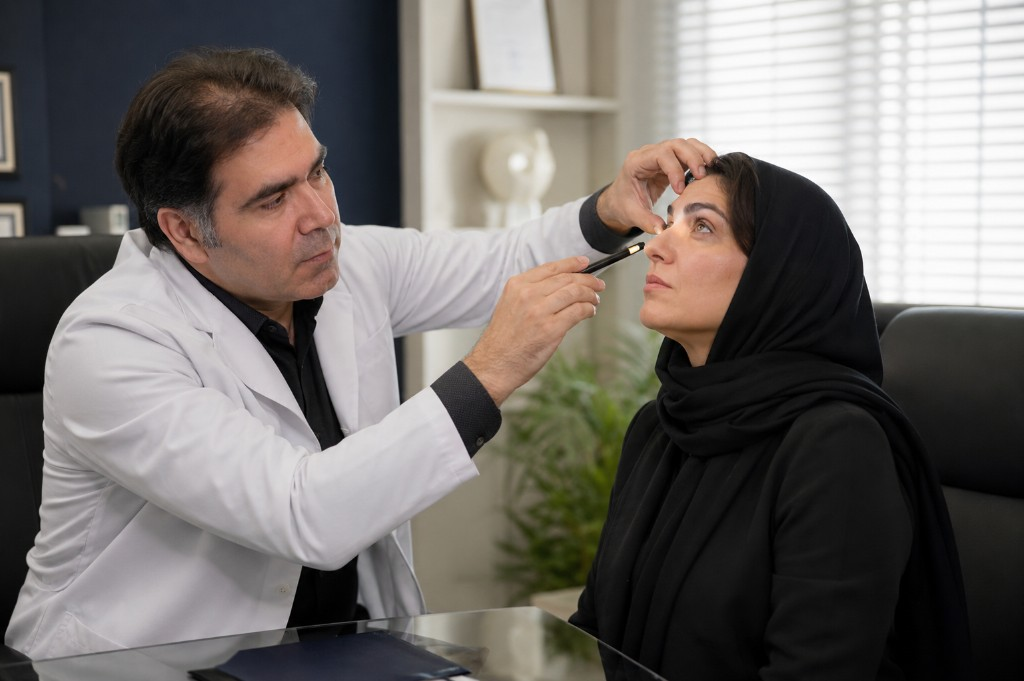

Blepharoplasty Guide: Procedure, Recovery & Cost Factors
This is an educational guide. Use it for definition, methods, recovery, and cost factors. Commercial ranking and the patient path (consultation, candidacy, estimate, booking) live on the blepharoplasty service page.
Quick summary
• Blepharoplasty removes excess upper and lower eyelid skin and fat and corrects drooping lids.
• Surgery usually takes 1–2 hours under local anesthesia with sedation.
• Main recovery is about 7–10 days; early healing takes 1–2 weeks.
• Results typically last 7–15 years — sometimes longer.
• Blepharoplasty removes excess upper and lower eyelid skin and fat and corrects drooping lids.
• Surgery usually takes 1–2 hours under local anesthesia with sedation.
• Main recovery is about 7–10 days; early healing takes 1–2 weeks.
• Results typically last 7–15 years — sometimes longer.
Blepharoplasty is eyelid cosmetic surgery that reshapes excess skin, fat, and sometimes muscle of the upper and/or lower lids for a more open, rested, and youthful look.
With age, the thin skin around the eyes is often the first area to lose elasticity. The upper lid may droop over the lash line and slightly narrow the visual field; the lower lid can look puffy or lax even when you are not tired. Blepharoplasty targets these changes — not by redesigning the eye’s fundamental shape, but by restoring a more youthful balance of skin, fat, and lid margin.
Many patients combine blepharoplasty with a facelift or other upper-face procedures so the result stays balanced across the face.
Why Do Eyelids Sag, Puff, or Wrinkle?
To understand eyelid aging clearly, start with the delicate eyelid anatomy. The eyelid is not just a fold of skin; layers of skin, muscle, septum, and fat work together so the eye can open, close, and stay lubricated.
Key eyelid layers
- Periorbital skin: The thinnest skin on the face — and often the first to lose elasticity and collagen.
- Orbicularis oculi muscle: The circular muscle around the eye that closes the lids and shapes dynamic expression. Its tone often softens with age.
- Orbital septum: A fibrous retaining layer that keeps the orbital fat pads in place. When the septum weakens, fat can bulge forward.
- Fat pads (medial, central, and lateral): Three fat compartments in the upper and lower lids; displacement or herniation creates structural puffiness that sleep alone will not fix.
Dermatochalasis vs ptosis — a critical distinction
These terms are often confused, but they need different treatments:
- Dermatochalasis: Excess, lax eyelid skin — usually upper lid. Heaviness, extra folds, and sometimes a mild visual-field limit come from overhanging skin. Blepharoplasty specifically addresses this: removing excess skin and, when needed, refining fat and superficial muscle.
- Ptosis: True drooping of the lid margin from weakness or stretch of the levator muscle (the lid elevator). The problem is not skin; it is the lifting mechanism. Blepharoplasty alone does not correct ptosis; that needs dedicated ptosis repair and can sometimes be combined with blepharoplasty.
This distinction is made on clinical examination — and it is what prevents under- or over-treatment.
Parallel pathways of eyelid aging
Visible change usually advances along several paths at once:
- Skin thinning and loss of collagen and elastin
- Reduced orbicularis oculi tone and orbital septum laxity
- Shift of medial, central, or lateral fat pads
- Genetics; some people develop puffiness or excess skin earlier
- Chronic fatigue, poor sleep, and allergies that worsen temporary puffiness without being the structural cause
Safety note: dry eye syndrome
Dry eye syndrome
should be assessed before any surgical decision. The lids help spread tears evenly and protect the ocular surface. If dry eye is already present — or meibomian gland function is weak — the plan, including how much skin is removed, should stay more conservative so complete lid closure and ocular moisture are not compromised after surgery.
Together, these factors can make the eyes look more tired or older than you feel — which is why blepharoplasty planning begins with layer-by-layer eyelid anatomy, not a one-size-fits-all template.
Who Is a Good Candidate for Blepharoplasty?
A good candidate usually experiences one or more of the following:
- Excess upper-lid skin that may slightly affect the visual field
- Under-eye fat bags or puffiness that do not improve with rest alone
- Extra wrinkles or lax skin around the eyes
- Good general health for local anesthesia with sedation
There is no fixed age. Some people consider blepharoplasty from the late thirties for genetic reasons; many others decide later. What matters most is the actual condition of your eyelids — not age alone.
Who Should Avoid Blepharoplasty?
- Uncontrolled eye disease: Severe dry eye, uncontrolled glaucoma, or certain thyroid-related eye conditions need evaluation and coordination before surgery.
- Uncontrolled chronic disease: Uncontrolled diabetes or high blood pressure raises complication risk.
- Smoking or blood thinners without coordination: Increases bruising and delays healing.
- Unrealistic expectations: Blepharoplasty refreshes and opens the look; it does not change the basic shape of the eye.
- Very mild laxity: In those cases, Botox or non-surgical options may be safer and more appropriate.
Types of Blepharoplasty
Depending on the area and type of laxity, one of the approaches below — or a combination — may be recommended:
| Type | Incision | Best for |
|---|---|---|
| Upper eyelid blepharoplasty | Fine incision in the natural upper-lid crease | Upper-lid skin excess, heaviness on the lash line |
| Lower eyelid (transconjunctival) | Internal incision, no visible external scar | Under-eye fat bags without much skin laxity |
| Lower eyelid (external) | Fine incision just below the lash line | Fat bags plus lower-lid skin laxity |
| Combined (upper and lower) | Both approaches in one session | Sagging and puffiness in both lids at once |
The final choice is based on a careful exam of your eyes and lids during consultation.
Blepharoplasty or Non-Surgical Options — Which Path Fits You?
If you are undecided between eyelid surgery and non-surgical options, the comparison below helps you choose based on the real cause of the problem — not just method names or short-term marketing claims.
| Method | Mechanism | Longevity | Best suited for | Downtime & risks |
|---|---|---|---|---|
| Surgical blepharoplasty | Physical removal of excess skin and removal or repositioning of fat pads | 7–15 years (sometimes longer) | Moderate to severe skin laxity, fat-pad puffiness, heavy upper lids | Main recovery 7–10 days; risks are manageable with an experienced surgeon |
| Plasma jet / Plexer | Superficial thermal skin tightening with plasma energy | A few months to about 1 year (variable) | Very mild skin laxity without meaningful fat-pad bulge | Redness and peeling; relatively higher risk of pigment change, especially in prone skin |
| Botox injection | Temporary weakening of part of the orbicularis muscle for a subtle brow lift / dynamic-line softening | About 3–6 months | Fine dynamic lines or a very mild brow lift — not eyelid fat puffiness | No surgical downtime; temporary effect that requires repeat treatment |
| Periorbital HIFU | Deeper thermal tissue tightening with focused ultrasound | About 6 months to 1 year | Mild periocular skin laxity without clear fat-pad herniation | Short-lived swelling or discomfort; no incision, but limited effect on fat puffiness |
For puffiness that comes from fat pads (fat pads / fat herniation), non-surgical methods do not meaningfully remove the root cause. Botox temporarily softens muscle; plasma jet and HIFU mainly act on skin tightness or soft-tissue heating. Fat protruding behind the orbital septum is not relocated or evacuated by heat or injection. Patients can spend time and money while structural puffiness either returns or never meaningfully improves.
That is why, when examination shows moderate-to-severe dermatochalasis or true fat-pad herniation, blepharoplasty is usually the more definitive and more economical choice over a multi-year horizon: one treatment pathway lasting 7–15 years, versus repeated non-surgical sessions whose cumulative cost rises quickly and still does not reach excess fat. The final choice should follow layer-by-layer eyelid assessment — not a one-session price comparison.
How Is the Surgery Performed?
1. Consultation and exam — Assessment of upper and lower lids, visual field, and ophthalmology input when needed. 2. Local anesthesia with sedation — The standard for blepharoplasty; anesthesia may change if combined with other facial surgery. 3. Incisions — Placed in the natural upper crease or along / inside the lower lid so scars stay as hidden as possible. 4. Fat and skin adjustment — Fat may be removed or repositioned; excess skin is refined precisely. 5. Fine sutures — Very delicate closure that leaves minimal trace.
Surgery usually lasts 1–2 hours; combined upper-and-lower cases tend toward the longer end of that range.
Combining Blepharoplasty with Other Procedures
 0:39
0:39Clinical case
Blepharoplasty and rhinoplasty surgical footage
Real operating-room footage of combined eyelid and nasal surgery, published with patient consent. It contains surgical images and plays only if you choose.
Blepharoplasty is often combined with neighboring procedures — especially a facelift, eyebrow lift, forehead lift, and temple lift — because these areas are anatomically linked. When brow ptosis accompanies upper-lid droop, treating the lid alone can leave an incomplete result. Combination decisions are always based on your exam, not a fixed package.
A real combined eyelid-and-nose clinical case is on the blepharoplasty service gallery.
For an example of complementary facial surgery, see the facelift combination procedures video.
Recovery and Return to Daily Life
Blepharoplasty recovery is usually predictable. Knowing what is normal at each stage lowers first-week anxiety and helps you follow care instructions more precisely. The timeline below is the day-by-day recovery guide used after eyelid surgery at Facelift 360.

Days 1–3 after surgery
This window is typically the peak of swelling and bruising around the eyes.
- Use cold compresses on the schedule your surgeon gives you to keep swelling under control.
- Sleep with your head elevated about 45 degrees (two pillows or a medical recliner angle) so fluid pools less in the lids.
- Avoid bending forward, heavy lifting, and rubbing the eyes.
- Mild dryness or light sensitivity is common in these days and is usually temporary.
Days 4–6
Swelling and bruising gradually ease, though the lids may still feel heavy or sensitive.
- Bruising often shifts from deep purple toward yellow — a normal sign that blood is being reabsorbed.
- Manage temporary dry eye with artificial tears or the drops your surgeon prescribed; do not switch medicines on your own.
- Keep avoiding direct pressure on the incision and intense exercise.
Day 7 — suture removal at the clinic
Around day seven, you return to Facelift 360 for suture removal (your exact date is written in your post-op instructions).
- Suture removal is usually brief and well tolerated.
- The scar still looks pink and fine at this stage; that early scar appearance is normal and fades with care over time.
- Many patients already notice a lighter lid feel and a more open look in this window.
Week two
Week two is often when social life gradually resumes.
- If your surgeon approves, you may use gentle makeup away from the incision line.
- Return to desk work and light social activity is realistic for many patients in this period.
- Delay intense sport, swimming pools, and saunas until the next clearance.
Months one to three — final result takes shape
Blepharoplasty results are not finished overnight; scar maturation and tissue settling continue for weeks to months.
- Protect aggressively from sun: quality sunglasses and, if advised, periocular sunscreen.
- Very mild residual swelling or local firmness can linger for weeks and then fade.
- The final result usually settles as tissue softens and scar color fades across the first to third month.
Special eye care
- Contact lenses: Do not wear contacts for at least the first 2 weeks; glasses are safer while the ocular surface and incision calm down.
- Use prescribed drops and ointments on schedule; do not stop them on your own.
- Call the surgical team urgently for rising pain, sudden vision change, or severe one-sided swelling.
Tehran air pollution and eyelid healing
Because of dust and air pollution in Tehran, the ocular surface is more irritable after blepharoplasty than usual.
- Rinse the eyes regularly with sterile saline (as directed by your surgeon) to clear particulates and reduce irritation.
- On high-pollution days, limit long outdoor exposure and wear protective eyewear.
- Do not rinse freshly operated eyes with tap water or non-sterile solutions.
With this day-by-day path, most patients return to daily routines within one to two weeks, and the natural, lasting blepharoplasty result consolidates over the following months.
What Will the Result Look Like?
The goal is a more open, rested gaze that stays in harmony with the rest of the face — without changing the fundamental shape of the eye. Results typically last 7–15 years, and sometimes longer. Unlike many injectable options, this longevity is a main reason patients choose surgical blepharoplasty.
Cost Factors & Educational Price Range
Cost depends on several factors, not one fixed price for everyone:
- Type of blepharoplasty (upper, lower, or combined)
- Type of anesthesia
- Surgeon experience and specialty
- Operating-room and follow-up fees
- Possible combination with other facial procedures
A fixed online number is not valid without examination. Case estimates and booking live on the blepharoplasty service page — this guide covers factors only.
Ready for a precise quote for your eyelids?
The most accurate cost estimate is only possible after an in-person exam. Start on the blepharoplasty service page.
The most accurate cost estimate is only possible after an in-person exam. Start on the blepharoplasty service page.
Possible Risks and Safety Notes
Like any surgery, blepharoplasty is not risk-free, though an experienced facial surgeon keeps risks low. Possible issues include expected recovery swelling and bruising, temporary dry or irritated eyes, brief blurred vision, local skin numbness, and — rarely — asymmetry or mild lid-margin ectropion.
Warning
An inexperienced surgeon or unlicensed center is the most common reason for serious complications after facial aesthetic surgery. Verify credentials before you decide.
An inexperienced surgeon or unlicensed center is the most common reason for serious complications after facial aesthetic surgery. Verify credentials before you decide.
To lower risk: follow pre- and post-op instructions carefully, share your full eye and medical history, avoid smoking for several weeks before and after surgery, and attend follow-up visits.
When Should You Contact Your Surgeon Immediately?
Severe or worsening pain, sudden or significant vision change, sudden heavy swelling or bleeding, or any unexpected change in the eye — contact the surgical team right away. This guide does not replace personalized medical advice.
Why Surgeon Choice Matters for Blepharoplasty in Tehran
Dr. Parsa Cheraghipour
ENT and facial cosmetic surgeon · about 15 years of specialized facial aesthetic experience · member of the Iranian Society of Plastic and Aesthetic Surgeons · board-certified maxillofacial surgery · Facelift360. Full address and contact: blepharoplasty service page · doctor page.
The eyelid is one of the most delicate facial zones to operate on; proximity to the eye and very thin skin mean that even a few millimetres too much or too little can change the result noticeably. Judging how much tissue to remove is often more important than the technique itself.
Questions to ask in consultation: How much blepharoplasty experience does the surgeon have? Which approach (upper, lower, or combined) fits my lids? Does combining with another procedure make sense for me? What is a realistic result for my eyes?
At a Glance: Blepharoplasty in Tehran
- Blepharoplasty corrects excess upper and lower lid skin and fat and improves drooping lids.
- Surgery takes about 1–2 hours under local anesthesia with sedation.
- Main recovery is about 7–10 days.
- Results typically last 7–15 years.
- Cost factors are summarized in the cost section; clinic estimates are on the service page.
- Surgery is performed by Dr. Parsa Cheraghipour, maxillofacial surgeon in Tehran.
Scientific Sources
1. StatPearls — Blepharoplasty (overview of indications, technique, and complications). 2. American Society of Plastic Surgeons (ASPS) — Eyelid Surgery patient guide. 3. Peer-reviewed reviews comparing transconjunctival vs external lower-lid approaches and ectropion risk.
Editorial note
Sources above should be verified before relying on clinical details; this guide does not replace an in-person consultation.
Sources above should be verified before relying on clinical details; this guide does not replace an in-person consultation.
Blepharoplasty treatment path at the clinic
Frequently Asked Questions
How long does blepharoplasty last?
Blepharoplasty results typically last 7–15 years — and sometimes longer. Natural aging continues, but the lids usually stay younger-looking than before surgery.
Is blepharoplasty painful?
You should not feel pain during surgery under local anesthesia with sedation. In the first days you may feel tightness, heaviness, or mild discomfort, usually controlled with prescribed pain relief.
How visible are blepharoplasty scars?
The upper-lid incision is usually hidden in the natural crease. For the lower lid, the transconjunctival approach leaves no external scar; the external approach uses a fine incision under the lash line that fades with proper care.
What is the best age for blepharoplasty?
There is no fixed age. Some people become candidates from the late thirties for genetic reasons; many others decide later. The main criterion is the actual condition of your lids, not age alone.
How is blepharoplasty different from a brow lift?
Blepharoplasty corrects the eyelid’s own skin and fat. A brow lift raises the brow and upper-eye tissues. If brow ptosis accompanies lid droop, combining both is often more logical than treating the lid alone.
Does blepharoplasty affect vision?
In severe upper-lid droop, removing excess skin can also improve the visual field. Temporary blurred vision in the first days is common and usually transient; any sudden or significant vision change needs immediate contact with your surgeon.
How much does blepharoplasty cost in Tehran?
Cost depends on type (upper, lower, or combined), technique, anesthesia, operating room, and possible combination with other procedures. A fixed online number is not a contract price; the most accurate estimate is given after an in-person exam on the blepharoplasty service page.
Is blepharoplasty suitable for men?
Yes. Men are also good candidates; incision planning and the amount of tissue removed should match male eyelid anatomy so the result stays natural.
Is blepharoplasty covered by insurance?
Most cosmetic blepharoplasty is not covered by basic Iranian insurance. If lid descent documents visual-field limitation, a functional pathway may apply and insurers may request perimetry or ophthalmology records. Coverage is the insurer’s decision. Treatment path and booking: the blepharoplasty service page.
How many days off work do I need?
Most patients allow about 7–10 days before returning to daily activity. Social return with light makeup is often possible from about week two; exact timing depends on your healing speed and job type.