
Best Age for a Facelift: Honest Guide to Choosing the Right Time
Introduction – When the Mirror Starts Asking Questions
Have you ever looked in the mirror and thought, "I don’t feel this tired, so why does my face look like this?" Maybe your cheeks have slipped a little lower, your jawline is less defined, or the lines around your mouth look deeper than before. That is usually when people start wondering about facelift surgery.
Very quickly, one question appears: "What is the best age for a facelift?"
Is it 40? 50? 60? Or is there even a single number at all?
The truth is, there is no universal magic age. In this guide, we will sit beside you like a trusted friend and explain how facial aging really works, what doctors at Facelift 360 Clinic look at during consultation, and how you can decide whether now is the right time for you – or not yet.
We will talk about:
- How the face actually ages over time
- Typical age ranges for facelift surgery (40s, 50s, 60s and beyond)
- Who makes an ideal candidate from a health and lifestyle perspective
- What happens during a facelift procedure in simple language
- Recovery, longevity of results and realistic expectations
- Common fears and FAQs about being "too young" or "too old"
How the Face Ages – And Why Age Is Only One Piece of the Puzzle
Facial aging is not something that happens overnight. It is a slow, layered process:
- Loss of subcutaneous fat that once kept the cheeks full and smooth
- Reduction of collagen and elastin, leading to thinner and looser skin
- Weakening of supporting ligaments and deeper facial structures
- Gravity, sun exposure, stress, lack of sleep and poor lifestyle habits over many years
Modern facelift surgery does not simply "pull the skin tight." At Facelift 360, surgeons work on the deeper layers of the face (such as the SMAS layer) to reposition sagging structures and restore natural contours. That is why chronological age alone is not enough. What really matters is the biological age of your face and the overall condition of your health.
Real-life example: Two 50‑year‑olds, two completely different faces
Patient A is 50, does not smoke, uses sunscreen regularly and has taken reasonable care of her skin. She has mild sagging along the jawline but good skin tone.
Patient B is also 50, but she has smoked for years, worked outdoors in strong sun and rarely slept well. At the same age she has obvious jowls, a soft jawline and deeper folds around the mouth.
Both have the same birthday, but their faces tell very different stories. So "the best age for a facelift" will not be the same for both.
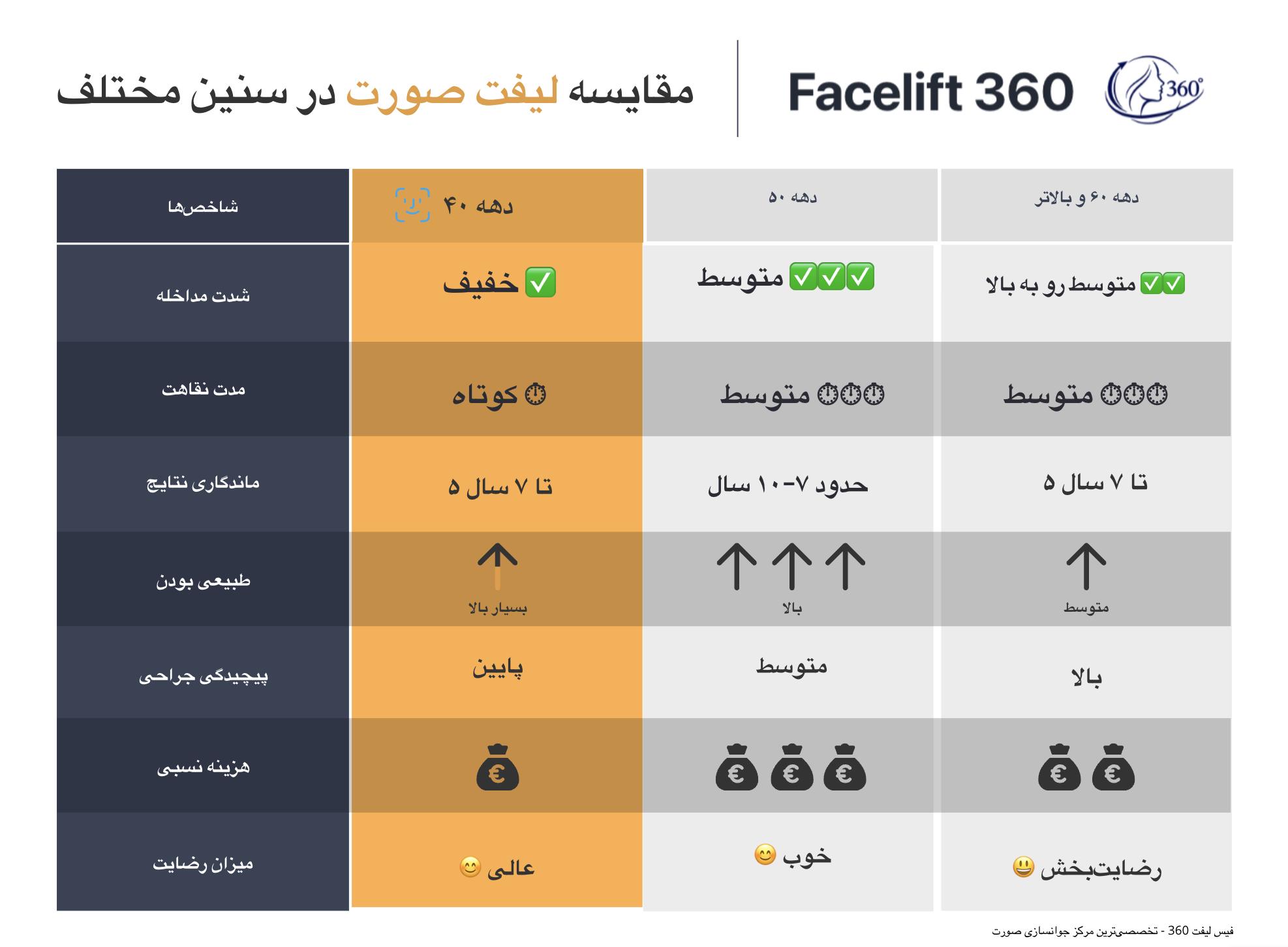
Typical Age Ranges for Facelift Surgery
 0:36
0:36Surgical Education
Best Age for Facelift
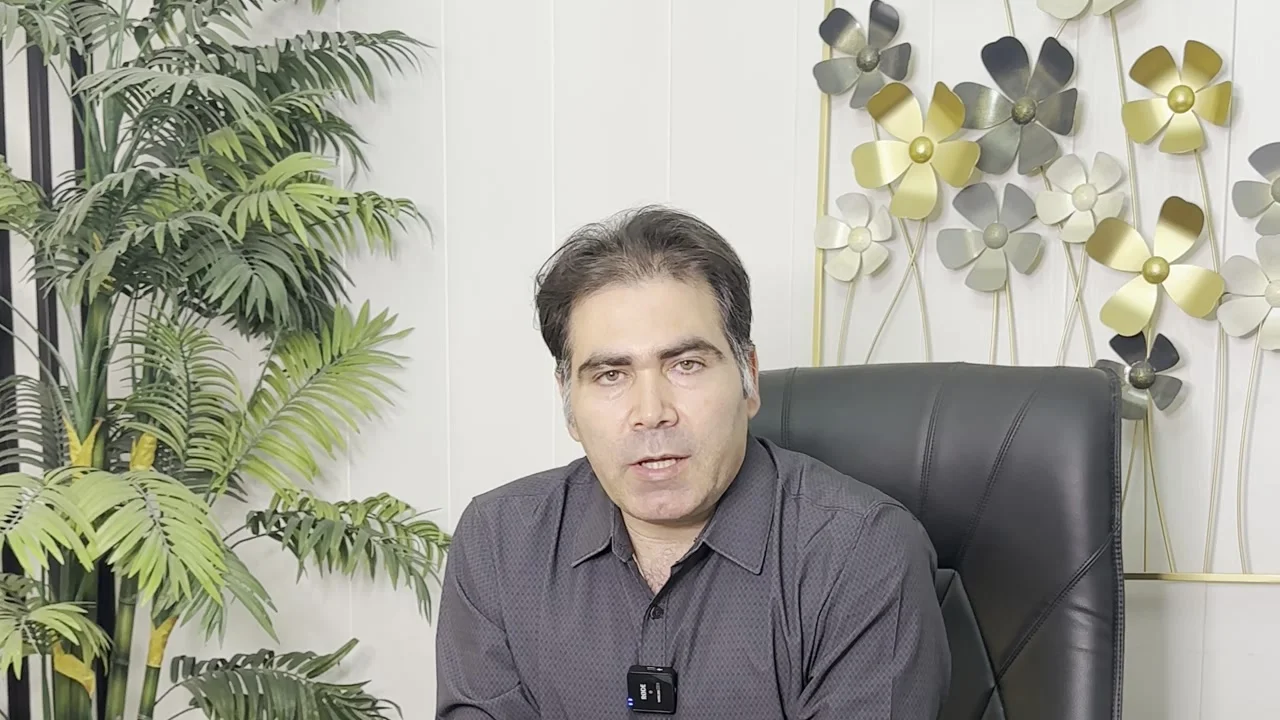
Dr. Parsa Cheraghipour explains the general best age for facelift is around 40–55, but skin age matters more than chronological age.
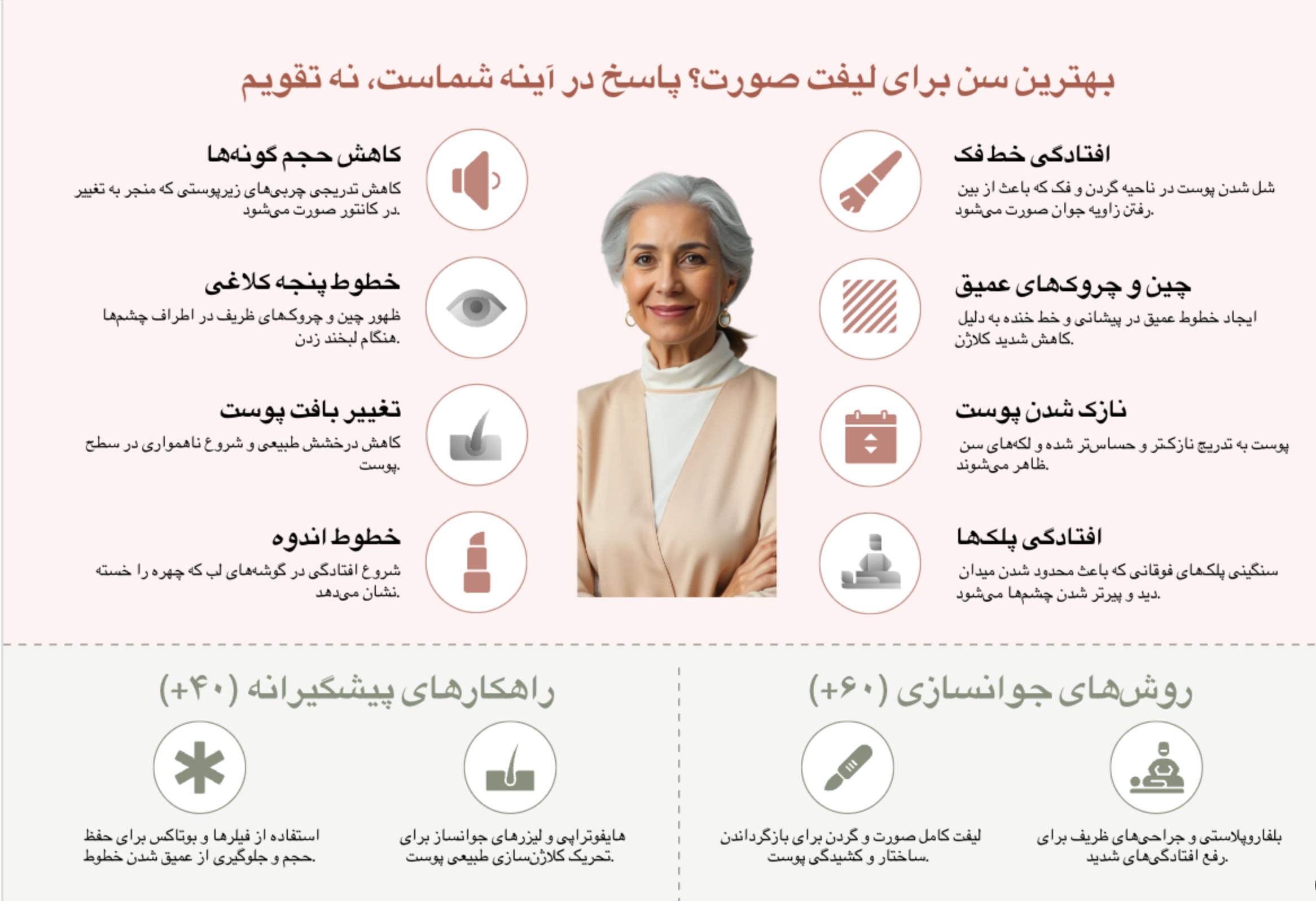
From years of experience at Facelift 360 Clinic in Tehran, most facelift candidates fall somewhere between their mid‑40s and late‑60s. This is a pattern, not a strict rule. Let’s break it down by decade.
Your 40s – Smart, Preventive Timing
In many people, the 40s are when early but real signs of aging appear:
- Mild sagging in the lower face
- Softening of the jawline
- Deeper laugh lines or marionette lines
At this stage – which for many people is the best age for a preventive facelift – some are still hesitant and prefer non‑surgical treatments. These can help when changes are mild. But if you want to stay a few years ahead of the aging curve, a carefully planned mini or lower facelift in your 40s can be a smart, subtle move.
Your 50s – When the Face and the Calendar Start to Disagree
By the time many patients reach their 50s:
- Sagging of the cheeks and jawline is more noticeable
- A mild to moderate double chin may appear
- Skin texture can look drier or thinner in some areas
- Fillers and threads alone often cannot keep up anymore
In this decade, a full or lower facelift can:
- Give the jawline back its definition
- Lift the midface for a fresher look
- Soften deep folds without an artificial, "pulled" look
Many of our patients in this age group say something like: *"Inside I feel 45, but my face looks more like 55. I just want those two numbers closer together."*
Your 60s and Beyond – Still Time to Look Like a Fresher You
It is common to assume that facelift surgery is "too late" after 60. In reality, age by itself is not a strict barrier. Instead, we look at:
- Heart and lung function
- Blood pressure and other medical conditions
- Medication use and general resilience
If these factors are under control and expectations are realistic, many people in their 60s and even early 70s can still enjoy meaningful rejuvenation. The goal is not to erase every line, but to bring you closer to a rested, younger version of yourself.
Who Makes an Ideal Candidate from a Health and Lifestyle Perspective?
At Facelift 360, we never look only at your passport age. To decide if this is the right time for surgery, we evaluate four main areas.
1. Overall Health
You are more likely to be a good candidate if:
- Serious heart or lung disease is under control
- Blood pressure and diabetes are reasonably managed
- Your medications can be adjusted safely for surgery
- You do not smoke, or you are willing to stop before and after surgery
Sometimes, someone may be in the "perfect age range" visually but has medical issues that make surgery unsafe. In those cases, we focus on safer, non‑surgical facial rejuvenation instead.
2. Skin and Soft‑Tissue Quality
Skin that still has some elasticity and thickness tends to drape much more naturally after a facelift. Sun damage, pigment spots or thinning skin are not automatic disqualifiers, but they may influence the treatment plan. In some cases, combining facelift surgery with laser or skincare programs gives the best outcome.
3. Lifestyle and Speed of Aging
Two people of the same age can age at very different speeds:
- Regular exercise, good sleep, stress control and sun protection slow aging
- Smoking, heavy sun exposure, chronic stress and poor diet accelerate it
If aging has been accelerated by lifestyle, you may feel ready for a facelift earlier. But it is just as important to improve those habits after surgery if you want the results to last.
4. Expectations and Emotional Readiness
Emotional readiness may be the most important factor. The best age for a facelift is when:
Are you a good candidate?
Facelift readiness assessment
Compare each item with your situation; the more that apply, the closer you may be to a consultation.
Check every item that is true for you. This checklist does not replace an in-person exam with a surgeon.
💪
A
Physical facial signs
- Sagging skin and soft tissue along the jawline (jowls)
- Loss of jawline definition and face-neck contour
- Loose neck skin or visible vertical neck bands
- Deepening nasolabial folds and marionette lines
- Cheek volume loss and a tired facial appearance
- Mild to moderate midface or cheek descent
🧠
B
Health and physical readiness
- Good overall health with controlled chronic conditions
- Non-smoker or willing to quit completely before surgery
- Stable weight without aggressive weight-loss plans near surgery
- Skin that still retains some elasticity
- Realistic expectations about surgical outcomes
📅
C
Recovery and decision readiness
- Ready for 10–14 days of rest and initial recovery care
- A support person available in the first days after surgery
- Aware of procedure steps, risks, and recovery timeline
- An in-person or online consultation with a specialist surgeon
- A stable life period (no major travel or stress right after surgery)
Quick scoring guide
Count how many items apply to you (maximum 16)
12–16 items
Excellent candidate
You may be ready to book a specialist consultation and plan surgery.
8–11 items
Likely suitable
A consultation is recommended to review facelift, mini lift, or combined options.
0–7 items
May be early
Non-surgical treatments, skincare, or lifestyle changes may be a better first step.
Contraindications and warningsIf any of the following apply, discuss them with your doctor first
- Uncontrolled heart disease or high blood pressure
- Clotting disorders or blood thinners without medical coordination
- Active smoking or heavy alcohol use
- Unrealistic expectations or desire for a completely different face
- Pregnancy or breastfeeding
Next step
If most items apply to you, it may be time to book a free online consultation with Facelift 360.
- You want your outer appearance to match your inner energy more closely
- You understand that surgery will not change who you are, just refresh how you look
- You accept that recovery takes time and has temporary swelling and bruising
- You are making the decision for yourself, not because of pressure from others
If you are mainly comparing yourself to social media filters or feeling pushed by friends or family, it can be helpful to pause and first book a free online consultation with our team to talk it through.
A Quick, Human-Friendly Look at the Facelift Procedure
Knowing what actually happens during surgery usually reduces fear.
In a typical facelift:
1. Your surgeon designs the right type of lift for your face – mini, lower, full facelift or facelift combined with neck lift. 2. Incisions are placed in natural creases around the ear and along the hairline so they are as hidden as possible. 3. The deeper facial layers are gently lifted and secured in a more youthful position. 4. Excess skin is trimmed and redraped; the aim is smooth, not "over‑tight."
Depending on your needs, a facelift can also be combined with:
- Neck lift to refine the jawline and under‑chin area
- Fat grafting to restore lost cheek volume
- Eyelid surgery to refresh the eye area
If you would like to dive deeper into the steps of surgery and preparation, read our detailed guide: Complete Preparation Guide for Facelift Surgery.
Recovery, Results and How Long They Last
Another big concern is: "How long will I be out of my normal life, and how long will my results last?"
What to Expect During Recovery
- First few days: tightness, swelling and some discomfort that is well controlled with medication.
- 10–14 days: most bruising and swelling fade; many people feel comfortable returning to desk work.
- 3–6 weeks: the face continues to soften and look more natural; you feel ready for social events and photos.
Younger patients in their 40s often heal a bit faster, simply because their tissues are more resilient. Older patients can still recover beautifully when they follow instructions carefully and protect their health.
For a step‑by‑step recovery checklist, see Essential Aftercare Following Facelift Surgery and Golden Tips for a Smooth Facelift Recovery.
How Long Do Facelift Results Last?
No surgery can freeze time, but a well‑performed facelift can turn the clock back by several years and keep you ahead of where you would have been without surgery.
Longevity depends on:
- Your age at the time of surgery
- Your genetics and bone structure
- Lifestyle habits such as smoking, sun exposure, sleep and skincare
On average, many people enjoy benefits for 8–12 years. Even after that, you will usually still look younger and fresher than if you had never done the procedure.
Real Patient Stories – Not Just Numbers on Paper
Story 1 – "I’m 43, is it too early?"
One 43‑year‑old patient told us: "Everyone says I’m too young for surgery, but every time I see my face on video calls after a long day, the lower part of my face looks older than I feel." On examination she had mild lower‑face laxity and early jowls. A carefully planned mini facelift was performed. Friends and colleagues only commented that she looked "rested" and "refreshed", not "operated on." For her, early 40s turned out to be the best age for a facelift.
Story 2 – "I’m 58 and my face has aged faster than my energy"
A 58‑year‑old executive said: "My motivation is still high, but my face looks ten years ahead of me." He underwent a lower facelift combined with a conservative neck lift. Six months later he shared that people kept asking whether he had changed his lifestyle or taken a long vacation because he looked more energetic.
Story 3 – "At 67, is it already too late?"
One 67‑year‑old woman came to Facelift 360 saying: "Maybe it is late, but I would love to enjoy my later years with a brighter face." After cardiac and medical clearance, she had a carefully planned facelift and neck lift. The goal was not to erase every line, but to reduce heaviness and restore definition. Her own words later: "It feels like someone lifted ten years of weight off my face."
Frequently Asked Questions – Age and Facelift Decisions
Is there a perfect age for a facelift?
No single age fits everyone. The best time is when facial sagging genuinely bothers you, non‑surgical options are no longer enough, your health allows surgery, and you feel emotionally ready for the change.
Am I too young for a facelift in my late 30s or early 40s?
For most people, early aging signs can be managed without surgery until the mid‑40s. But if you have clear, genetically driven sagging or major asymmetry earlier, a smaller or more targeted lift may be appropriate. The decision should always be made after an in‑person evaluation with an experienced surgeon.
Am I too old for a facelift in my late 60s or 70s?
Higher age alone does not automatically exclude you. The key questions are: Is your heart and lung function stable? Is your blood pressure under control? Are you mentally and emotionally prepared? With proper evaluation and realistic expectations, many people in this age group can safely undergo surgery.
Will I look pulled or fake after surgery?
With modern techniques that focus on deeper tissues rather than just the skin, the aim is a natural, well‑rested version of you – not a new person. Choosing a qualified surgeon and communicating your goals clearly is far more important than the exact number of your age.
How long will my facelift results last?
Average longevity is 8–12 years, but the range depends on lifestyle and genetics. Good skincare, sun protection, not smoking and maintaining a healthy weight all help you enjoy your results longer.
What if I am not ready for surgery yet?
If you are not ready – emotionally, financially or medically – there is no rush. At Facelift 360 we often design non‑surgical plans using skincare, injectables or device‑based treatments to slow visible aging until (and if) you decide the time is right for surgery.
Final Thoughts – The Best Age Is When Your Face and Your Heart Agree
Ultimately, the best age for a facelift is not something you find in a chart. It is the moment when:
- You are no longer happy with what you see in the mirror
- Simpler treatments do not give satisfying improvement
- Your health and lifestyle are stable enough for surgery
- And you feel ready to invest in yourself, not to please others
If you feel you are getting close to that point, consider booking a consultation with Facelift 360 Clinic in Tehran. Together we can evaluate your facial age, skin quality and goals, and help you decide whether now is the right time – or whether a step‑by‑step plan with non‑surgical rejuvenation is better for you right now.
Sometimes the only thing standing between you and a fresher, more confident version of yourself is an honest, pressure‑free conversation with a specialist who truly listens.